Pizza Automation in Restaurants: What Works in 2026
Pizza automation: where it actually works
Pizza is one of the most automatable foods in a restaurant: the process is a line of repeatable stations, the ingredients are consistent, and volume is predictable. That is why pizza automation keeps attracting operators facing kitchen staffing shortages.
But "robot pizza chef" headlines oversell it. What works today is automating specific stations, not replacing the whole kitchen.
The stations worth automating first
Good candidates share three traits: repetitive, consistent inputs, and easy to measure.
- Sauce application: consistent quantity, repeatable spiral pattern, easy to verify by camera
- Cheese and topping dispensing: portioned, measurable, and a major source of food-cost variance when done by hand
- Oven loading and unloading: hot, monotonous, and perfectly repeatable
- Dough pressing and portioning: mechanical and consistent, though dough handling remains the hardest station to automate well
Poor first candidates: hand-stretched artisan dough, delicate finishing, and anything with frequent menu changes.
What a cobot cell can and cannot do
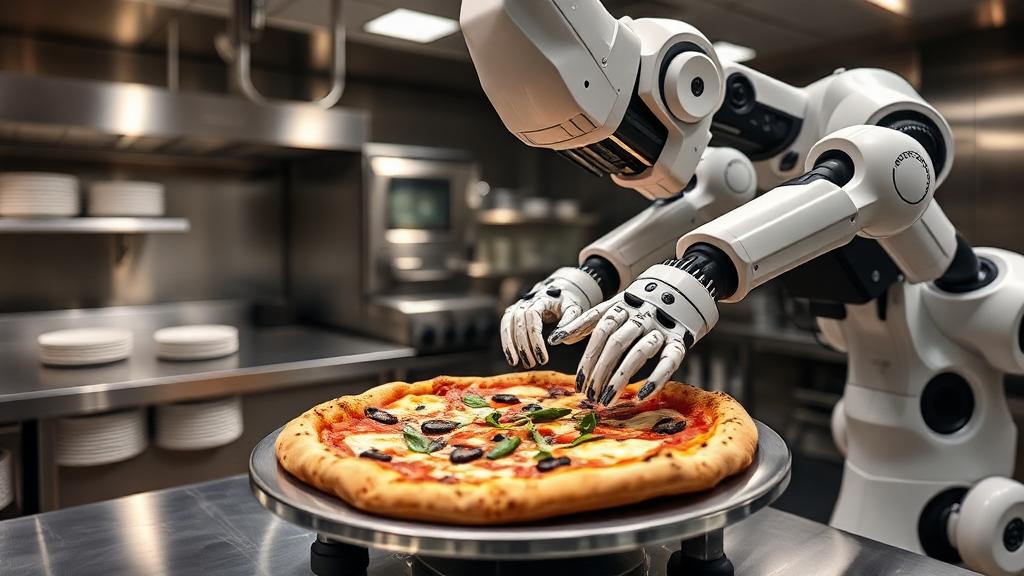
A collaborative robot arm with the right end-of-arm tooling can run one station at a steady, consistent pace through a full shift. It does not get tired, it does not portion "by eye", and every pizza comes out the same.
What it cannot do: improvise when the dough is different today, taste anything, or handle a station it was not set up for. A human still runs the kitchen.
Consistency is the real prize
The business case is rarely raw speed. It is:
- Portion control: cheese and toppings measured the same way every time directly cuts food-cost variance
- Consistency across shifts and locations: the 11pm pizza matches the noon pizza
- Hygiene: fewer contact points during preparation
- Staffing relief: the hardest shifts to fill are the repetitive ones
How to run a pilot
- Pick one station — saucing or oven handling are the usual first choices.
- Measure today: output per hour, topping weight variance, waste, staff time.
- Install the cell with guarding, cleaning procedures and a stop plan.
- Run a fixed trial period with the same measurements.
- Decide on scale-up with your own numbers, not a vendor's brochure.
Estimate payback for your own station with the free cobot ROI calculator, and read our honest guide to cobot ROI and total cost of ownership.
How smert.ai helps
smert.ai is a robotics systems integrator based in Tsim Sha Tsui, Hong Kong. We integrate cobot arms from established makers with our own computer vision software, and help restaurants scope, pilot and validate kitchen automation one station at a time. Contact us to discuss a pilot, or read our broader kitchen automation guide.
Related: Hospitality Cobots
Transform Your Business with SMERT Robotics
Ready to experience the benefits of hospitality automation? Our team is ready to help you get started.