After Mopping: A Floor-Care Checklist Before Mobile Assistance Resumes
After Mopping: A Floor-Care Checklist Before Mobile Assistance Resumes
Owner-approval draft · 20 November 2026
A freshly cleaned kitchen can feel ready for everything: breakfast, bare feet and a busy family morning. But “clean” and “ready for mobile assistance” are different decisions. Mopping may leave moisture, cleaning products may leave residue, and chairs or rugs may not yet be back where they belong.
This checklist addresses one narrow question: when should a household resume mobile assistance after floor care? It is not a cleaning-product recommendation, a capability claim or a substitute for product-specific operating instructions. Its purpose is to make the decision explicit rather than automatic.
What the evidence does—and does not—settle
A review of ground locomotion systems compares wheels, tracks, legs and hybrids across factors including obstacles, energy and complexity. It provides context for choosing mobility mechanisms, but it is not a home-assistance trial and does not establish acceptable conditions after mopping.
A domestic humanoid design study describes a wheeled prototype tested for indoor movement, small bumps and small-item pickup. Those bounded tests do not establish broad domestic competence or compatibility with a household’s floor finishes and cleaning products.
The practical implication is modest: a broad mobility label cannot answer a specific floor-care question. The checklist below is a proposed household decision process, not a protocol validated by these papers.
1. Establish the pause before cleaning starts
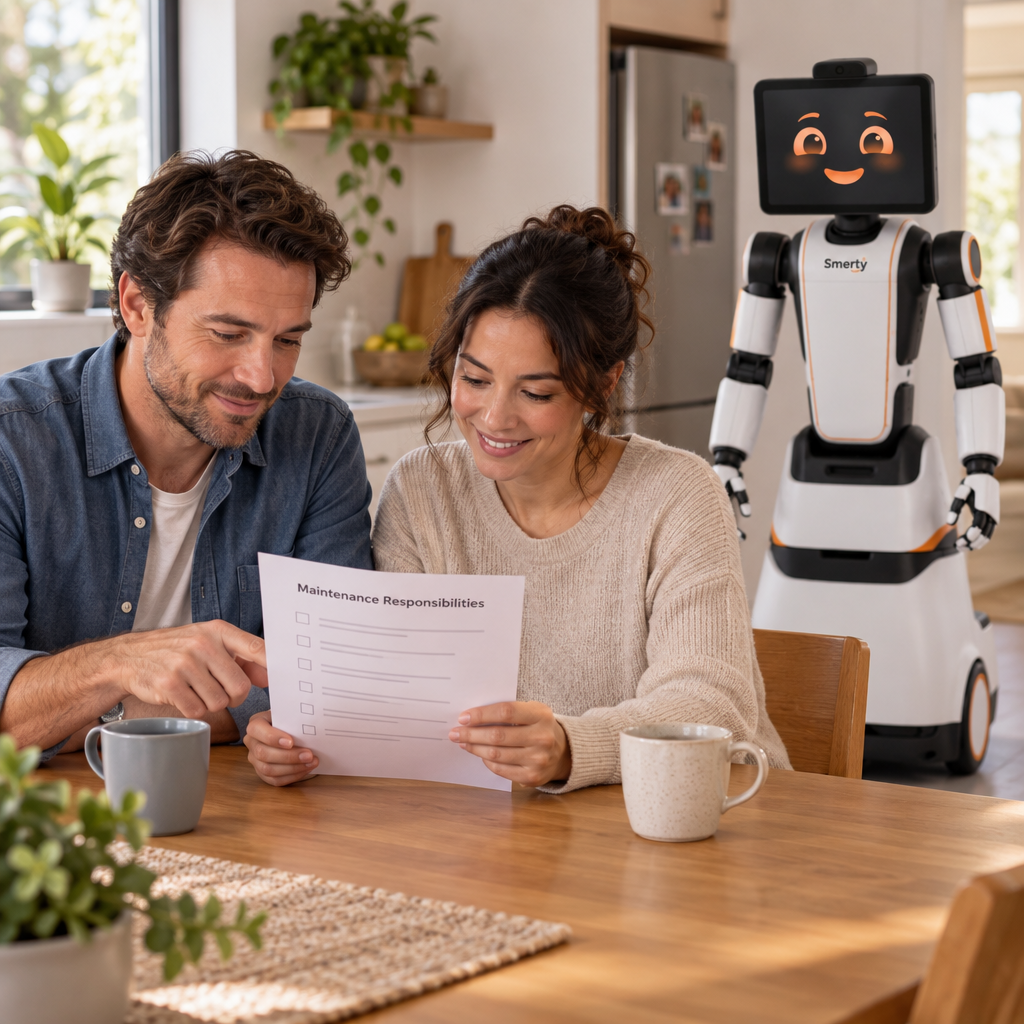
Decide who is responsible for pausing operation and who may authorize resumption. That avoids one person restarting assistance while another is still cleaning behind a door.
Before adopting any routine, request documented answers to these questions:
- How should operation be paused before floor care?
- Where should the product remain during cleaning?
- Are there restrictions around charging equipment and cleaning liquids?
- What floor conditions are excluded from operation?
- What should happen if liquid reaches the product?
If the documentation does not answer a relevant question, treat it as unresolved. Do not substitute an improvised household test, especially one involving liquids near electrical equipment.
2. Check the floor against instructions, not appearances alone
A shiny floor is not evidence of compatibility. Follow the floor manufacturer’s and cleaning-product instructions, together with the mobile product’s documented limits. Do not invent a universal drying interval: different finishes, products and conditions can require different treatment.
Use a short release checklist:
- Has cleaning finished throughout the intended operating area?
- Have the applicable drying and use instructions been followed?
- Is there visible moisture, foam or spilled cleaner?
- Is there an unexplained film or residue that needs resolving?
- Are buckets, cables and cleaning tools put away?
An ordinary visual check can identify reasons to wait. It cannot certify traction or prove that a surface meets an engineering requirement. Where compatibility remains unclear, leave the task paused and seek guidance.
3. Restore the room before restoring the task
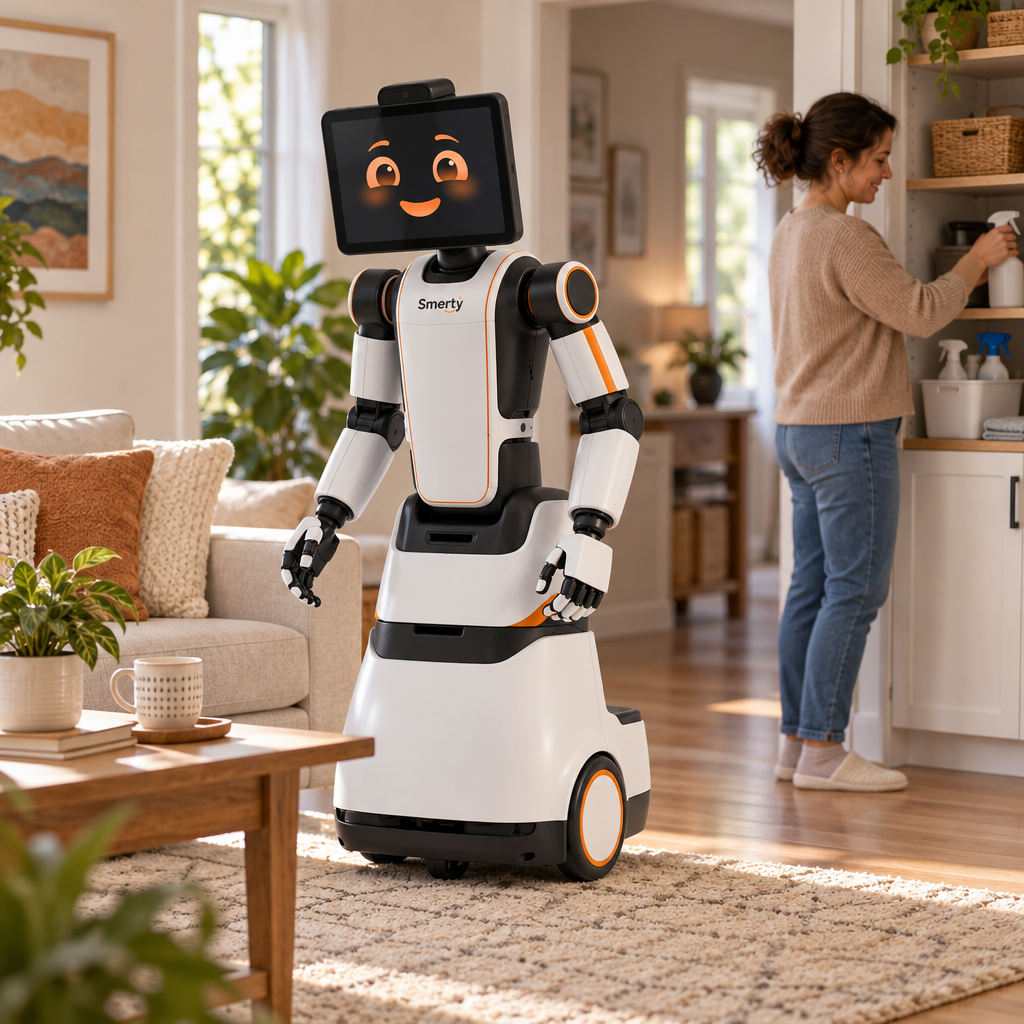
Floor care often changes more than the floor. A mat may be folded over, a dining chair may block an opening, or a lightweight basket may be left beside a doorway.
Compare the room with its normal arrangement. Return movable items to their intended places, check that rug edges are settled, and make sure doors are in the positions required for the planned task. Keep stairs and other excluded areas outside the operating plan.
This is not permission to redesign a route around undocumented limitations. If cleaning reveals a damaged transition strip, loose flooring or another unresolved condition, address that condition rather than asking mobility technology to compensate for it.
4. Separate a floor issue from a maintenance issue
If something looks unusual on a wheel, cover or other accessible surface, use only the documented inspection and cleaning procedure. Do not improvise solvents, lubrication, disassembly or adjustments.
A useful household note is simple: what was noticed, where it was noticed, and whether operation remained paused. There is no need to record family movements or create a detailed household activity history.
Repeated problems deserve a support question, not increasingly creative workarounds. Ask whether the observed condition is covered by the product’s maintenance instructions and what approved action is required.
5. Know when a different mobility approach matters
Where the actual requirement involves steps, discontinuous terrain or obstacles beyond a wheeled design’s documented envelope, legs or a suitable hybrid may be the better fit. The locomotion review supports considering these mechanism trade-offs rather than assuming one approach suits every setting.
However, choosing legs or a hybrid does not itself establish suitability for a recently cleaned floor. That still requires evidence and instructions for the specific design and conditions.
Make “not yet” an easy household answer
A practical release decision has three outcomes: resume within documented conditions, wait for an identified condition to clear, or seek guidance. Nobody should feel obliged to restart simply because cleaning is finished.
Explore Smerty’s development page with that same evidence-led approach. Smerty is in development; market verification and certification must precede sale. This checklist describes questions for future evaluation, not verified Smerty floor-care performance. The goal is a calmer household routine, with more room for family life and fewer assumptions hidden beneath a sparkling floor.
Transform Your Business with SMERT Robotics
Ready to experience the benefits of hospitality automation? Our team is ready to help you get started.