Technology Franchise Opportunities: How a Cobot Franchise Works
How a Cobot Franchise Works
Technology franchise opportunities appeal to entrepreneurs who want to sell practical business improvements rather than another consumer product. A cobot franchise focuses on helping local organisations identify suitable tasks, implement cobot applications, and support them after installation.
The opportunity is not simply to resell equipment. Customers need someone to understand their workflow, assess feasibility, coordinate integration, and keep the application useful as operations change.
smert.ai is a Hong Kong-based cobot integration and AI consulting company with a lab in Tsim Sha Tsui and a US branch in Delaware. We integrate cobot arms from established makers; we do not manufacture the arms. Prospective partners can explore our franchising information, then confirm current availability, commercial terms, and responsibilities directly.
What Does the Local Franchise Business Do?
A cobot franchise can connect local customer relationships with specialist integration expertise. The precise division of work must be defined in the franchise agreement, not assumed from marketing language.
A typical project lifecycle includes:
- Discovery: Observe a repetitive task and document its volume, variability, staffing, and constraints.
- Feasibility: Check whether the task, workspace, and business case support a cobot application.
- Proposal: Define equipment, integration, safeguards, training, acceptance criteria, and exclusions.
- Deployment: Coordinate installation, testing, operator instruction, and documented handover.
- Support: Manage service requests, planned maintenance, and changes to the approved application.
Before committing, establish which activities the franchisee may perform independently and which require smert.ai or another qualified specialist. Sales training alone does not qualify someone to commission a cobot application safely.
What Customers Actually Buy
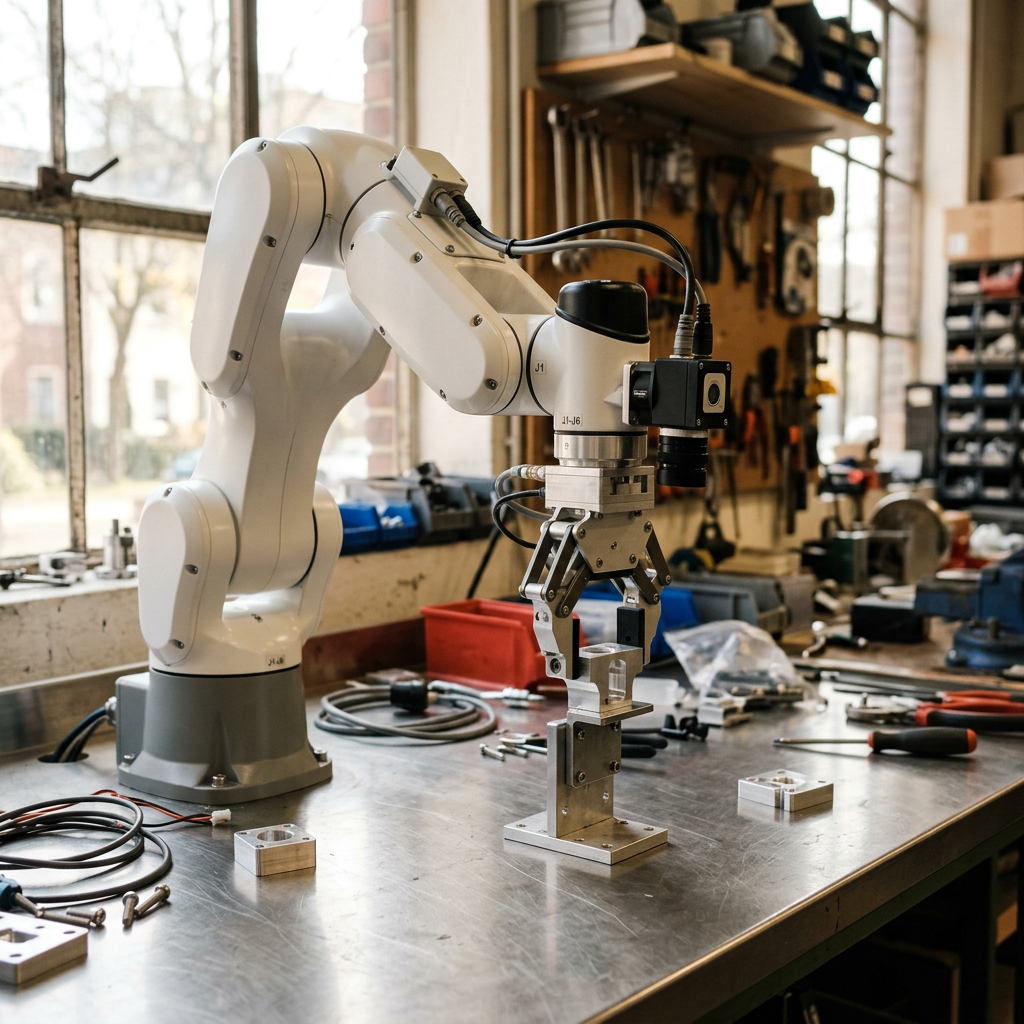
Customers usually buy a defined application, not an abstract promise of automation. That might mean moving a consistent component between two fixtures or presenting packaged items at a workstation.
The delivered scope may include a cobot arm, end-of-arm tooling, fixtures, application software, installation, and training. Each proposal should state exactly what is included and who supplies it.
Computer vision may support an application by detecting visible conditions and flagging possible issues for human review. Its usefulness depends on lighting, camera placement, product variation, and the review process. Avoid presenting it as an autonomous quality authority.
See our cobot integration overview for background when preparing questions about application suitability.
Choosing a Sensible First Market
The strongest technology franchise opportunities start with a specific customer problem. Choose a sector where you can access decision-makers and observe real workflows, rather than targeting every business that handles physical objects.
Repetitive Industrial Tasks
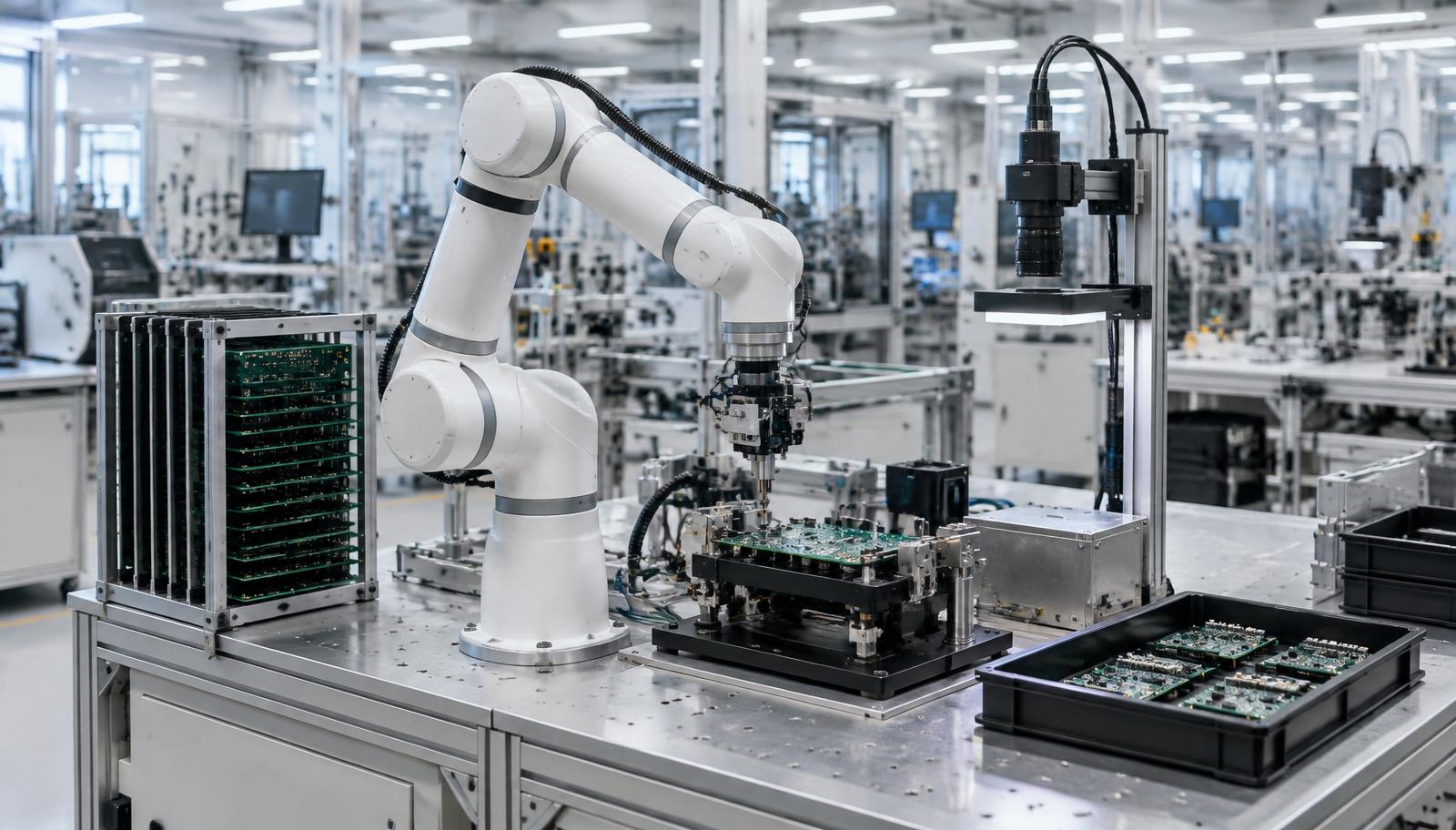
Potential applications include component transfer, simple loading and unloading, or packing support. Look for stable part presentation, manageable product variation, and enough recurring work to justify integration.
Machine interfaces, sharp items, hot surfaces, and pinch points can substantially change project complexity. A repetitive task is not automatically an easy task.
Hospitality and Service Workflows
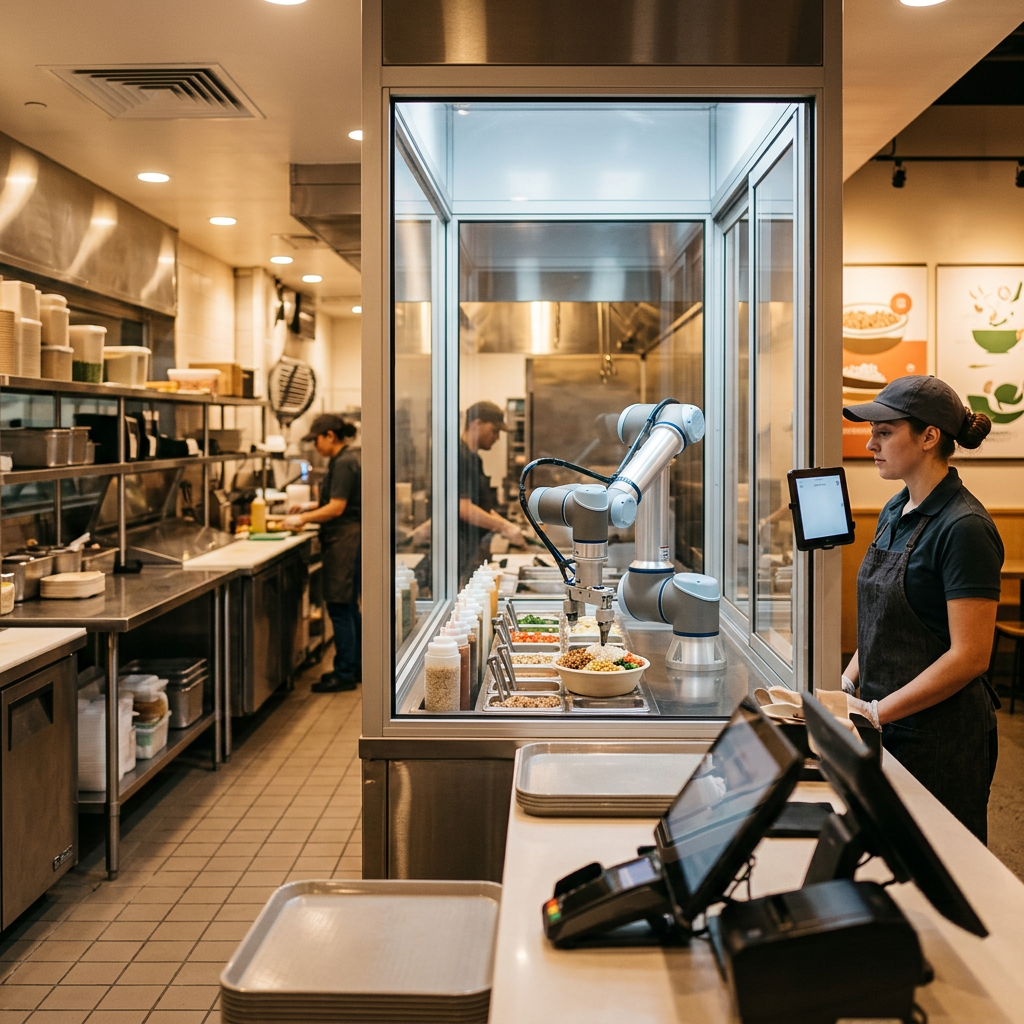
Back-of-house handling or preparation support may be worth investigating where space, cleaning routines, and throughput are predictable. Check hygiene requirements, spill exposure, and access for staff before proposing equipment.
Supervised Healthcare Support
Any healthcare-related application should remain assistive and supervised, not a medical device. For example, an organisation might investigate non-clinical supply handling in an appropriately controlled area. Suitability requires site approval and assessment; do not promise clinical outcomes or independent patient care.
Understanding Costs and Revenue
A responsible franchise evaluation separates the cost of joining the network from the cost of delivering customer projects. Neither should be inferred from a headline investment figure.
Ask for a Complete Cost Schedule
Request written details covering:
- Any initial franchise fee and ongoing royalties.
- Territory arrangements and renewal conditions.
- Demonstration equipment, software, and tooling costs.
- Training, travel, insurance, and premises requirements.
- Marketing obligations and lead-generation expenses.
- Installation support, warranty administration, and spare parts.
- Working capital needed before customer invoices are paid.
These are due-diligence categories, not a statement that smert.ai charges each listed item. Confirm the actual terms and distinguish mandatory spending from optional spending.
Test Project Economics, Not Just Sales Value
Depending on the agreement, potential revenue streams may include project delivery, approved training, support, and application changes. Confirm which activities are permitted and how revenue is shared.
For each project, subtract equipment, tooling, integration labour, travel, subcontracting, and expected support costs from the selling price. Then consider overheads and the timing of cash payments.
A large order can still strain cash flow if supplier deposits are due well before the customer pays. Milestone billing and clearly defined acceptance criteria deserve as much attention as gross margin.
Building a Credible Customer Business Case
Start with a measured baseline: task time, shift patterns, output, stoppages, and current staffing. Separate observed data from estimates.
Count benefits only when the customer can realistically realise them. Time released from one task is not automatically a payroll saving; it may instead create capacity for other work. Likewise, additional output has financial value only if demand and downstream capacity support it.
Include commissioning time, maintenance, consumables, supervision, and expected interruptions. Test conservative assumptions alongside the expected case.
The ROI calculator can help structure an initial discussion. Treat its output as a planning estimate to validate against site measurements and a complete project quotation, not a guaranteed payback period.
Training and Safety Responsibilities
Build Practical Capability
A franchisee needs more than a convincing demonstration. Relevant skills include task discovery, application scoping, proposal preparation, operator instruction, troubleshooting, and escalation.
Review the training program and ask which competencies it covers, how learning is assessed, and what supervised practice is available. Confirm who authorises installation work and who provides technical support when a problem exceeds the local team's capability.
Assess Every Installation Separately
Safety depends on a per-site risk assessment. ISO 10218 and ISO/TS 15066 are standards integrators assess against; referencing them does not guarantee a safe installation.
The assessment must consider the full application, including tooling, workpieces, nearby equipment, access, and reasonably foreseeable misuse. A cobot label does not eliminate crushing, trapping, cutting, or other hazards.
Define safeguards, operating procedures, emergency arrangements, and maintenance responsibilities before handover. Changes to tooling, layout, speed, or the task may require reassessment. Do not treat a demonstration setup as approval for a customer's workplace.
A Practical Route to Your First Project
Avoid buying a large demonstration setup before you understand local demand. Start by interviewing prospective customers and documenting a few recurring tasks in one sector.
With customer permission, gather workflow observations, representative samples, and layout information for technical review. Choose a candidate with consistent inputs, a clear process owner, and measurable acceptance criteria.
Before a pilot, agree on its duration, scope, supervision, responsibilities, and success criteria. State what happens if the results do not justify a full deployment. Any pilot still needs appropriate site assessment and controls.
After delivery, review actual performance and support demand against the proposal. These lessons help improve future estimates without turning one successful installation into a blanket promise for every customer.
FAQ
Do I need an engineering background to explore a cobot franchise?
Not necessarily, but technical work requires appropriate competence. Confirm the training pathway, specialist support, and limits of your responsibilities. Customer development experience is valuable, but it does not replace integration expertise.
Does smert.ai manufacture the cobot arms?
No. smert.ai integrates cobot arms from established makers. The application combines selected equipment with tooling, software, workflow design, and implementation support according to the agreed project scope.
How much does a cobot franchise cost?
Request a current written proposal. Evaluate any franchise fees alongside demonstration equipment, training, insurance, marketing, and working capital. Also confirm ongoing charges and which costs arise separately for each customer project.
Is a cobot safe to operate beside people?
That depends on the application and its per-site risk assessment. Tooling, workpieces, layout, and operating conditions all matter. Appropriate safeguards and procedures must be established before operation; the cobot designation alone is not enough.
Ready to evaluate whether this model fits your market? Contact smert.ai to discuss your territory, experience, target customers, and questions about current franchise terms.
Related: Technology franchise opportunity
Transform Your Business with SMERT Robotics
Ready to experience the benefits of hospitality automation? Our team is ready to help you get started.