Should Cleaning Access Rule Out a Kitchen Automation Task?
How do you choose a kitchen task for automation without overlooking cleaning and food safety?
Choose a task only after mapping its cleaning, changeover and restart workflow alongside the production motion. Ask who must access each part, what gets removed, and what evidence permits work to resume. If those steps remain unresolved, defer the task rather than treating a successful pick-and-place demonstration as proof of kitchen readiness.
For commercial kitchen automation, this is a narrow selection question: can the proposed task survive the complete cleaning workflow? It is not a ranking of robot applications. The supplied technical sources explain calibration and AI risk management; they do not establish food-contact suitability, cleaning effectiveness or kitchen compliance. Those require separate evidence and review by the people responsible for the operation.
What should you map before comparing machines?
Write a task boundary that includes preparation, production, interruption, cleaning, reassembly and restart. A description such as “move a container between two positions” is incomplete if it excludes removing the tool or reaching behind its mounting bracket.
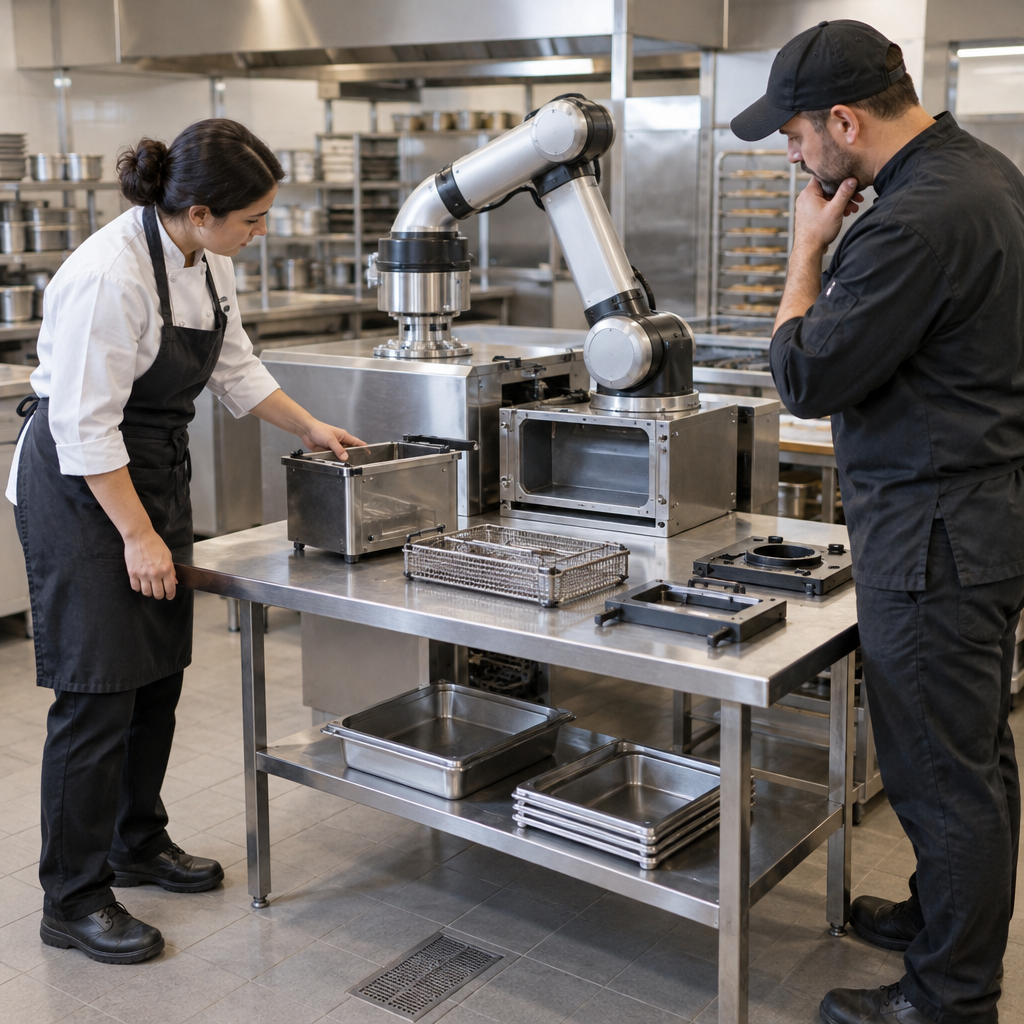
Walk through the proposed layout with the operator, cleaning lead, food-safety lead and integrator. Ask them to identify:
- Which items the tool touches, and which nearby surfaces need assessment.
- Which parts must be reached, removed or replaced during cleaning.
- Where removed parts will go and who will reinstall them.
- Which product changes require a different procedure under the kitchen’s existing controls.
- Who decides whether an interrupted task can resume.
Record unanswered questions rather than filling them with assumptions. A task with fewer unresolved interfaces may be a better candidate than one with a more impressive production demonstration. That is a selection principle, not proof that the simpler task meets food-safety requirements.
When should cleaning access rule a task out?
Use cleaning access as a decision gate before committing to a layout. Ask for a walkthrough showing how the proposed equipment would be accessed under the agreed shutdown procedure. Include tools, containers, fixtures, cables and adjacent equipment—not just the robot arm.
Consider two hypothetical layouts for the same transfer task. One keeps the tool mounting fixed but makes a nearby surface difficult to reach. The other allows removal of a fixture, but introduces a reassembly and positioning check. Neither wins automatically: compare access, handling steps, verification effort and the consequences of incorrect reassembly.
Defer the candidate if essential access depends on an undefined intervention, if component documentation has not been reviewed against the intended cleaning process, or if nobody owns the restart decision. The appropriate response may be redesigning the fixture or narrowing the task, rather than adding more automation.
Do not prescribe cleaning chemicals, temperatures or contact times from robotics documentation. Have the responsible kitchen team establish the applicable procedure and request supporting equipment documentation.
What can cameras establish—and what can they not?
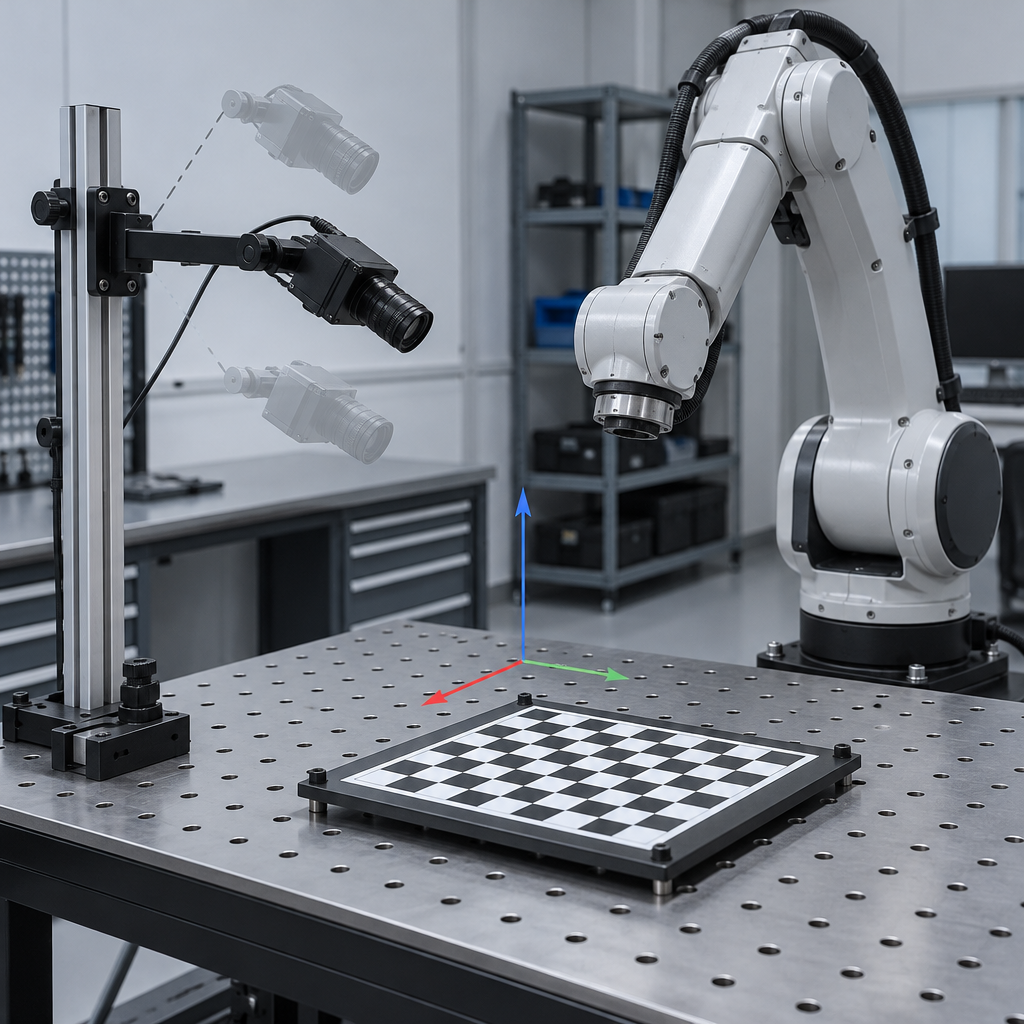
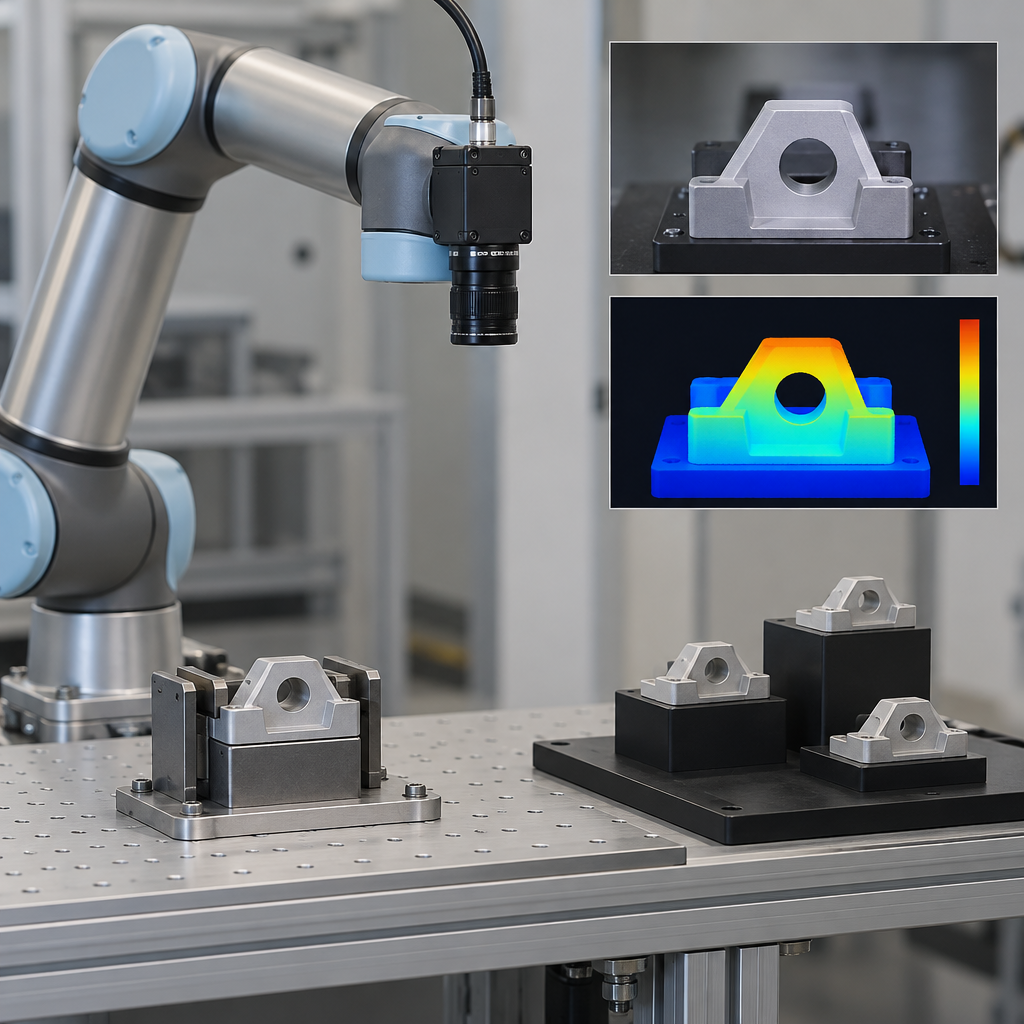
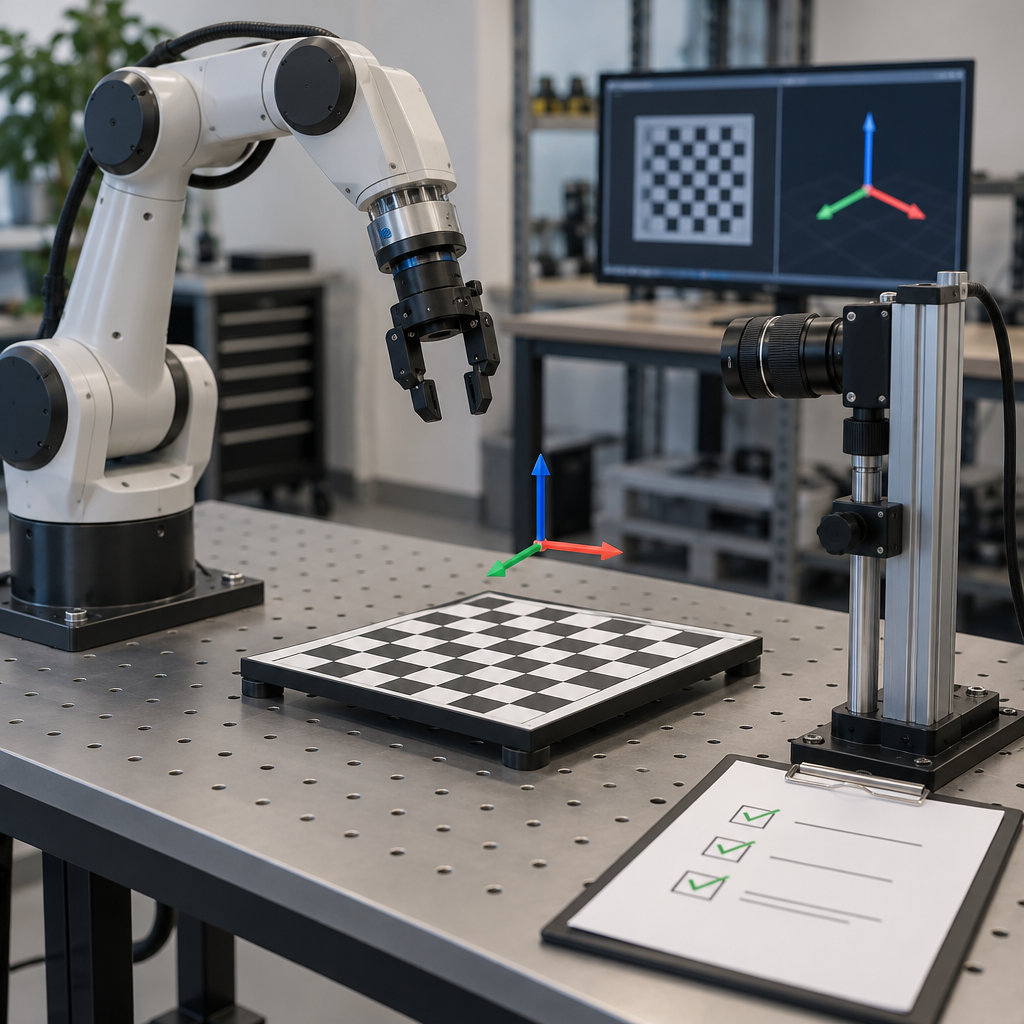
A camera may support positioning, but positioning evidence is different from cleaning evidence. The OpenCV calibration tutorial describes estimating camera intrinsics and distortion from chessboard observations, and estimating the pose of known geometry with solvePnP. Detecting a calibration board alone does not establish calibration quality.
MoveIt’s calibration documentation explains how extrinsic calibration relates the camera pose to the machine coordinate frame. Eye-in-hand calibration uses camera-to-target and base-to-end-effector pose pairs. A camera picture alone is not a validated safe motion command.
For task selection, ask whether cleaning requires disturbing a camera, fixture or tool relationship on which positioning depends. If so, include the necessary evaluation in the proposed restart workflow. This is not an argument against removable parts; it makes their operational trade-off explicit.
Neither calibration source validates a cleaning process. Keep the positioning review, motion review and food-safety review distinct, with clear ownership for each.
What belongs on the evaluation checklist?
Use this checklist to compare candidate tasks. Mark each item as evidenced, unresolved or requiring redesign; avoid hiding a critical gap inside an average score.
- Task boundary: Does the proposal cover cleaning and restart, not just production?
- Contact map: Has the kitchen team reviewed intended product contact and relevant surrounding surfaces?
- Component evidence: Is documentation available for assessment against the proposed use and cleaning procedure?
- Access: Can the team demonstrate the required access in the proposed layout?
- Removal and reassembly: Are responsibilities, part locations and checks defined?
- Positioning: Are assumptions about cameras, tools and fixtures documented?
- Exceptions: Is there a defined response to spills, dropped items, uncertain observations and incomplete reassembly?
- Release: Are the required checks and decision owners identified before restart?
- Operational burden: Have cleaning, changeover, checking and recovery effort been recorded alongside production performance?
The NIST AI Risk Management Framework provides voluntary guidance for managing AI risks throughout design, development, use and evaluation. It can inform how teams organize unresolved AI questions, but it is not product certification or a substitute for kitchen-specific evidence.
SMERT is an OEM and integrator. For a proposed SMERT Cobot application, use the hospitality robotics service discussion to review this complete task boundary—not to assume a machine fits before assessing the workflow.
What three follow-up questions should you ask?
- Can we review a cleaning-access walkthrough before approving the layout? Request a physical mock-up or layout review that exposes reach and removal constraints.
- What must be checked after reassembly, and who authorizes restart? Separate positioning checks from the kitchen’s cleaning and food-safety decisions.
- What would make us reject this task? Agree on unresolved-evidence and workflow criteria before a persuasive production demonstration changes the discussion.
Related: Cobot integration
Transform Your Business with SMERT Robotics
Ready to experience the benefits of hospitality automation? Our team is ready to help you get started.