What Evidence Should an AI Robotics Pilot Require Before Releasing Motion?
What must an AI robotics pilot validate before releasing motion for a real task?
An AI robotics pilot should validate the chain from observation to proposed action: camera calibration, coordinate mapping, task-specific accuracy, rejected-input handling and the conditions under which results remain valid. It should also document who authorises progression. These checks support an evidence-based decision; they do not establish that motion is safe or replace a separate deployment assessment.
The narrow question is not whether the robot can complete an impressive demonstration. It is whether the team has enough traceable evidence to accept—or reject—a proposed action under defined conditions. Treat that decision as a release gate, not a celebration of the first successful run.
What exactly is the pilot asking permission to do?
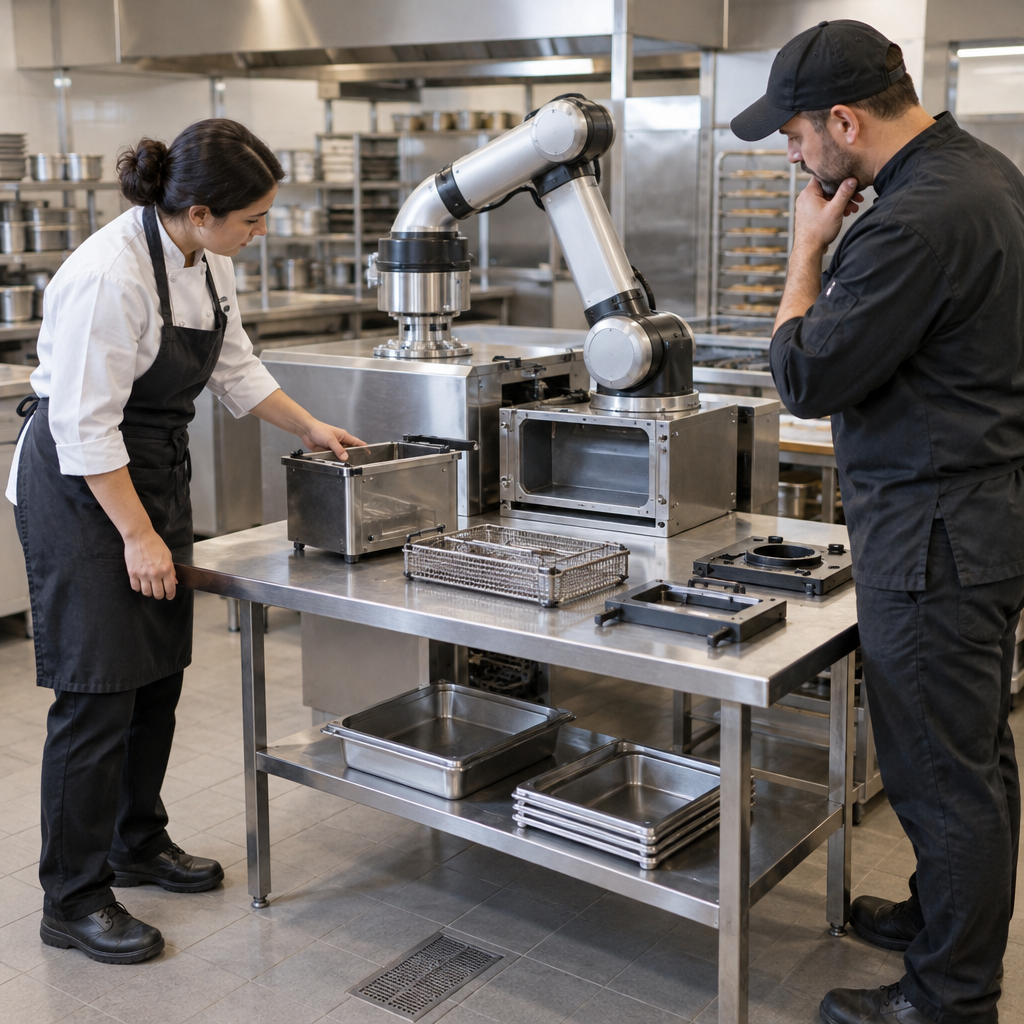
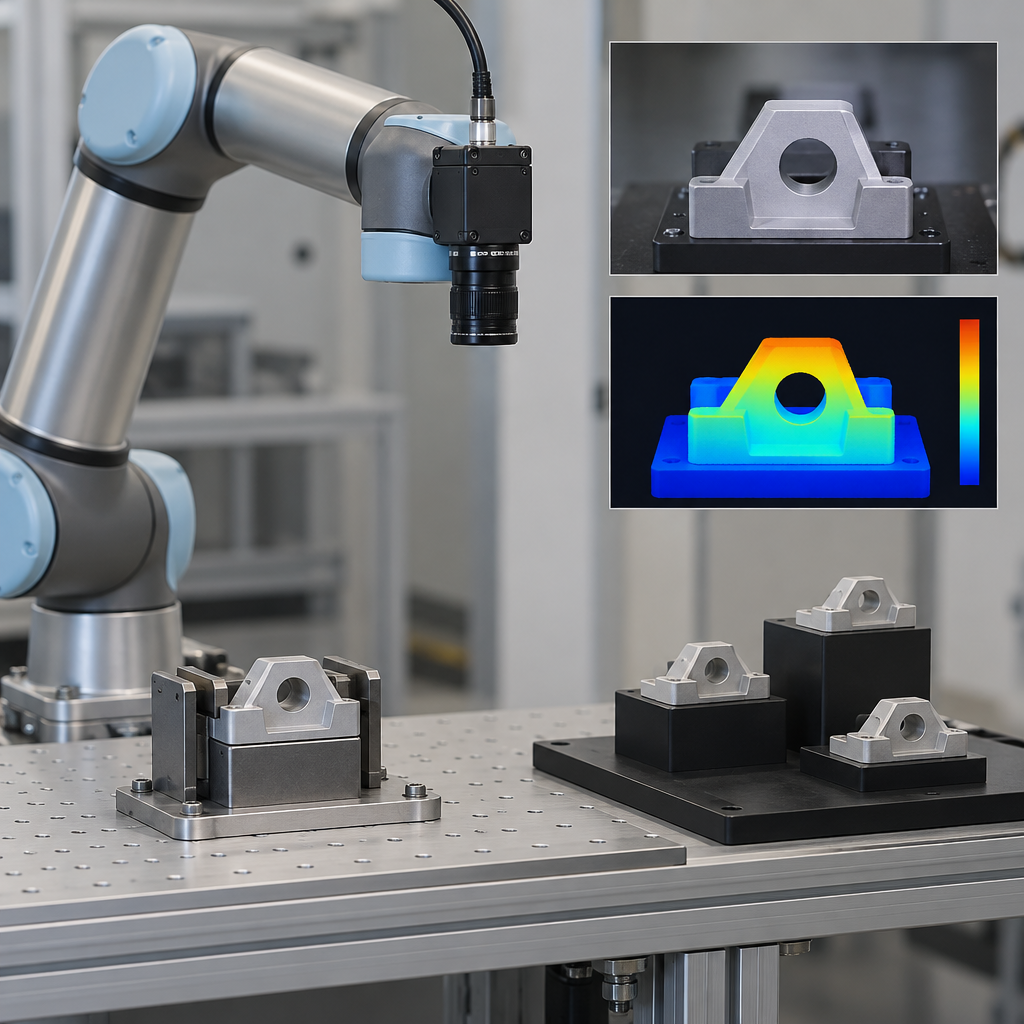
Write a bounded task statement before testing. For example, a proposed pilot might locate a known component in a defined presentation area and propose a placement position. That is a test scenario, not a claim about any product's capabilities.
Specify the permitted object geometry, camera arrangement, working area and acceptable task error. Identify excluded conditions, such as an unrecognised object or a changed camera mounting. Agree on acceptance criteria before reviewing results, rather than adjusting them to fit a favourable demonstration.
A narrower task leaves more exceptions for people to resolve, but makes the evidence easier to interpret. A broader task requires evidence across more conditions. Neither choice should be disguised by one headline success percentage.
Does the observation map correctly into machine coordinates?
Separate two calibration questions.
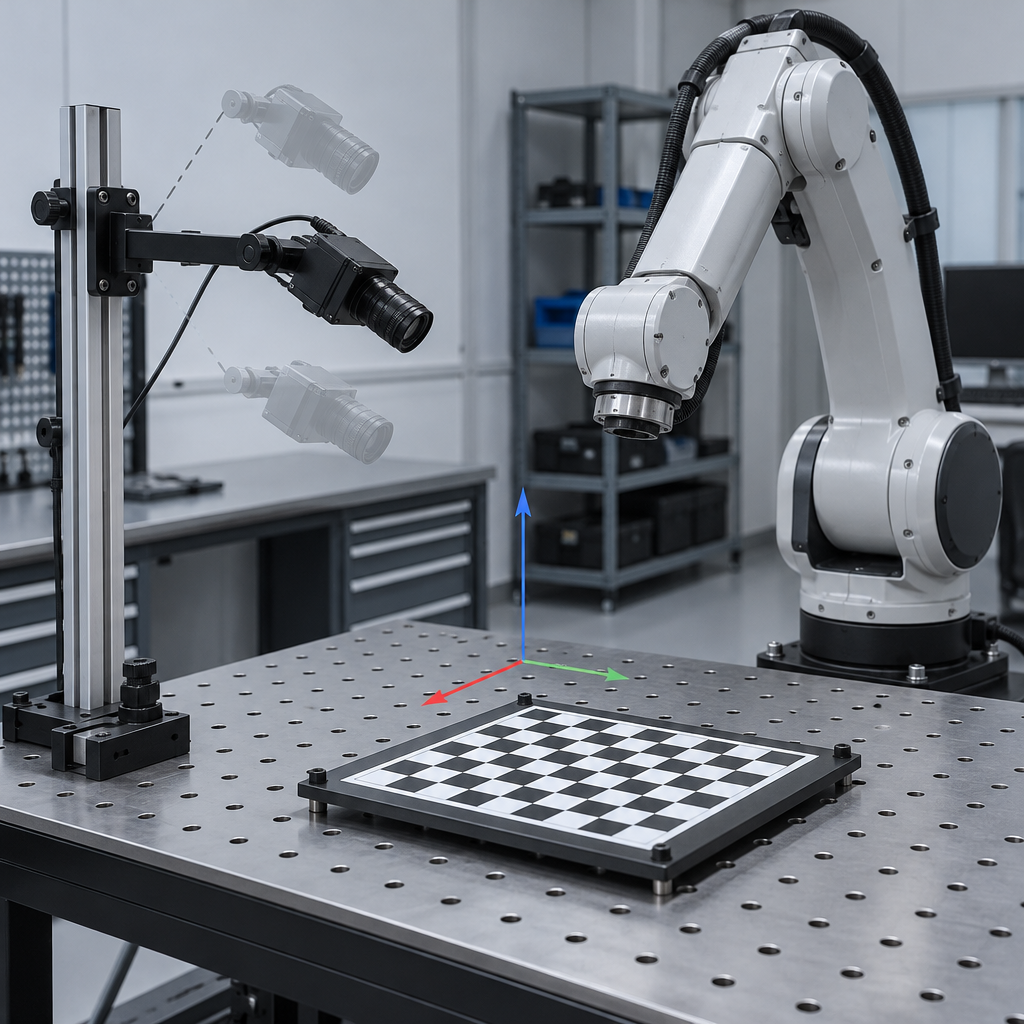
First, is the camera model evaluated? The supplied OpenCV calibration tutorial describes estimating camera intrinsics and distortion from chessboard observations, and using solvePnP to estimate the pose of known geometry. Detecting a calibration board is not, by itself, an evaluation of calibration quality.
For the pilot, request evaluation observations distinct from those used to establish the calibration. Compare estimated positions against known references across the intended task area. Record the discrepancies and the conditions in which they occur; do not simply retain a screenshot showing that the board was detected.
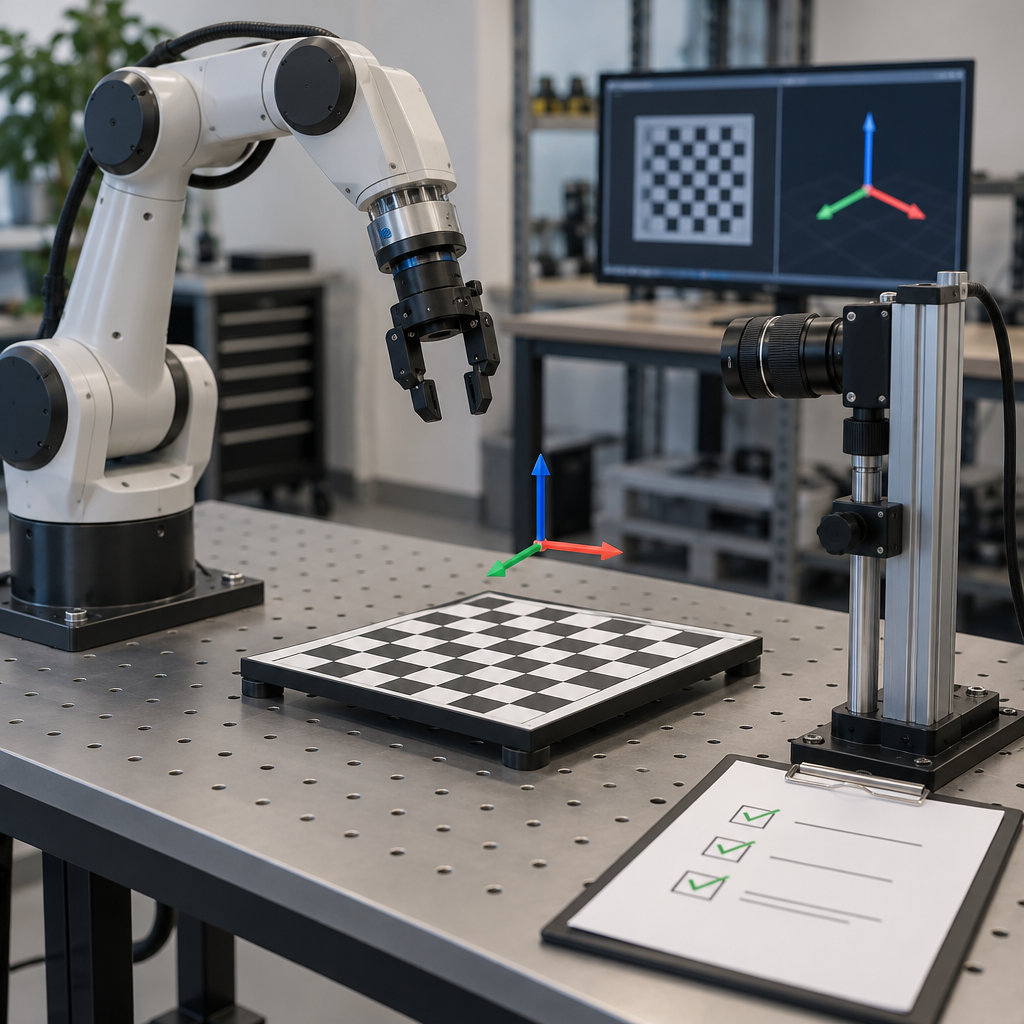
Second, is the camera related to the machine frame? MoveIt's calibration explanation describes extrinsic calibration as relating camera pose to a machine coordinate frame. For eye-in-hand calibration, camera-to-target and base-to-end-effector pose pairs support that relationship.
Ask the integrator to identify the coordinate frames, transformation direction and calibration version used for each test. A plausible pose in camera coordinates is not yet a validated motion command. Keep that distinction explicit in the release record.
What should happen when the evidence is insufficient?
Define rejection behaviour before introducing physical task execution. Suggested test cases include an incomplete target view, an object outside the agreed geometry, unavailable calibration information and a changed camera arrangement.
For each case, specify the expected decision: reject the proposed action, request another observation or require review. These are recommended pilot requirements, not capabilities established by the supplied sources.
The practical trade-off is between accepting more inputs and declining uncertain cases. More rejection may interrupt the workflow; accepting inputs outside evaluated conditions leaves a larger evidence gap. Document both outcomes rather than counting only completed tasks.
Where possible, inspect proposed actions without executing them first. This can expose interpretation or coordinate errors before a motion trial, but it does not validate the physical task or establish deployment readiness.
What belongs in the evaluation checklist?
Use a release record that a reviewer can inspect without relying on the demonstration team's memory:
- Task boundary: Defined objects, arrangements, operating conditions and exclusions.
- Camera evidence: Calibration method, evaluation observations and measured discrepancies against known references.
- Coordinate evidence: Named frames, transformation direction, calibration version and checks in the intended task area.
- Acceptance criteria: Task-specific limits agreed before testing, with a stated rationale rather than a universal accuracy threshold.
- Rejection tests: Expected and observed decisions for missing, unsuitable or out-of-scope inputs.
- Complete results: Accepted proposals, rejected proposals, task errors and interventions—not just successful runs.
- Change control: Changes that require review or repeat evaluation, including camera remounting or altered task geometry.
- Decision ownership: Who reviews unresolved issues, authorises the next stage and records restrictions.
The NIST AI Risk Management Framework provides voluntary guidance for managing AI risks and trustworthiness throughout design, development, use and evaluation. It supports disciplined review; it is not product certification. Likewise, completing this checklist is not a safety approval.
What can this evidence actually justify?
The result should be a bounded decision: continue controlled evaluation, revise the task or withhold progression. Calibration evidence supports conclusions about the evaluated observation-to-coordinate relationship. Task results support conclusions about the tested conditions. Neither establishes unrestricted operation.
SMERT is an OEM and integrator. For a proposed SMERT Cobot project, use the AI robotics service discussion to define the evidence required at each gate before selecting a demonstration target. The useful deliverable is a reviewable acceptance record, including limitations—not an unsupported promise of autonomy.
Which three questions should the team ask next?
- Which task tolerance determines acceptance? Identify the reference measurement and error limit the reviewer will use.
- Which change would invalidate our current evidence? Name the trigger, the owner and the evaluation to repeat.
- What happens after a rejected proposal? Define who investigates, what information they receive and what authorisation is needed before retrying.
Related: AI consulting services
Transform Your Business with SMERT Robotics
Ready to experience the benefits of hospitality automation? Our team is ready to help you get started.