Computer Vision · HACCP & Hygiene
Hygiene you can prove, every shift
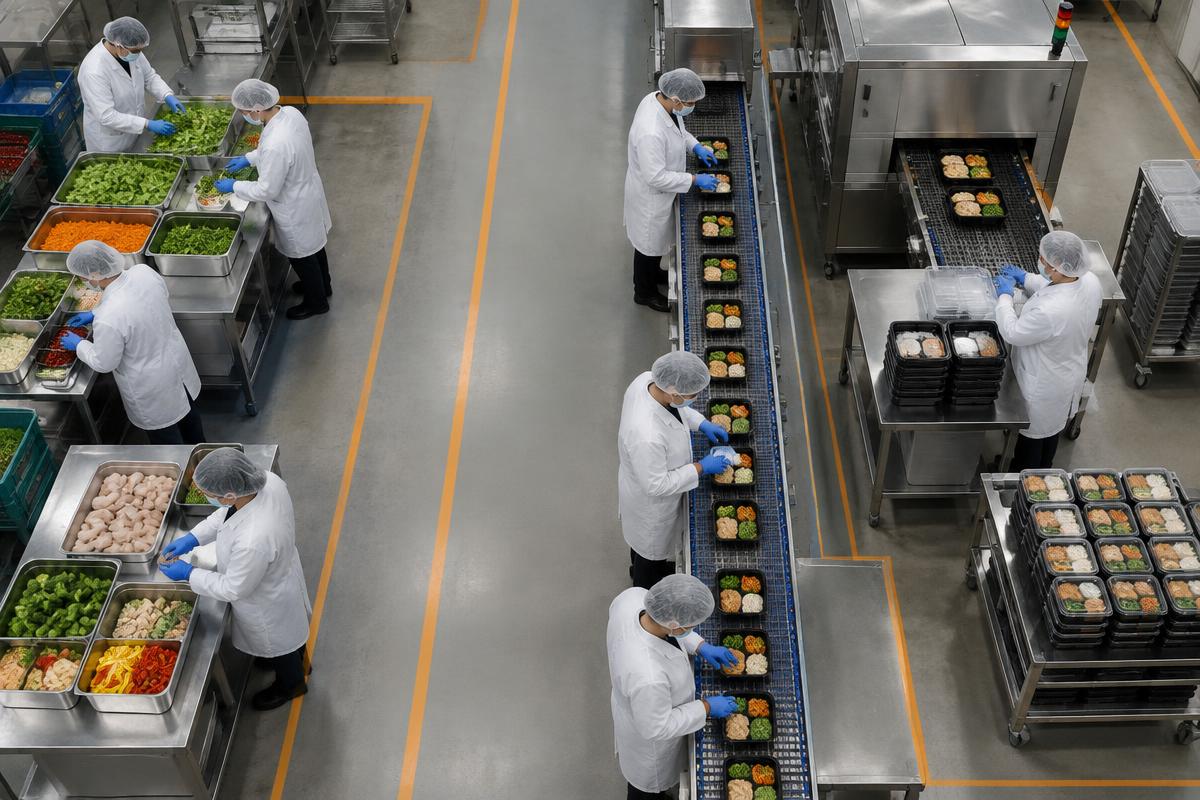
AI cameras that check your hygiene and safety procedures are really followed in central kitchens, food factories and canteens — and alert the supervisor the moment they are not.
Breaches happen when nobody is looking
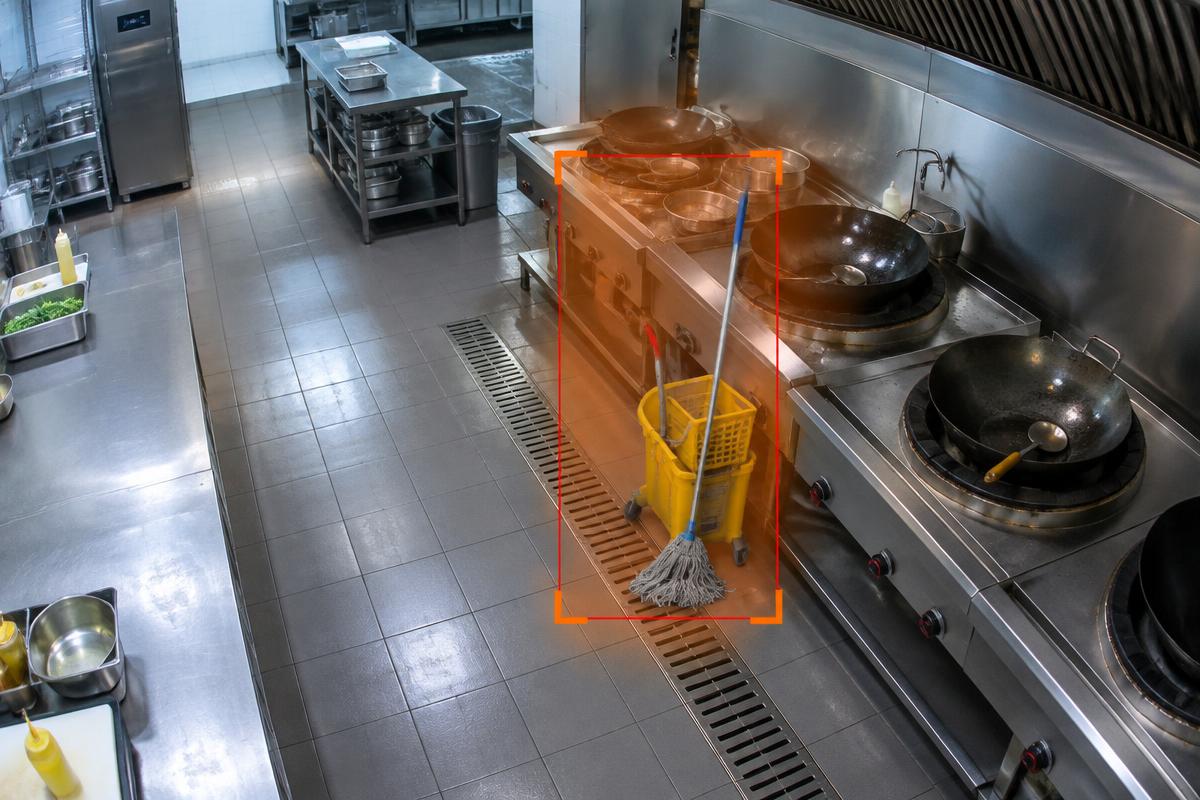
Paper checklists are often ticked after the fact. Supervisors cannot watch every station on every shift. Recent public cases of cleaning tools found inside cooking pots show how fast one photo can destroy trust in a kitchen.
Computer vision watches the critical points continuously, catches the problem while it can still be fixed, and keeps the evidence that your procedures work.
What the cameras check
Eight checks out of the box, each tuned to your own procedures.
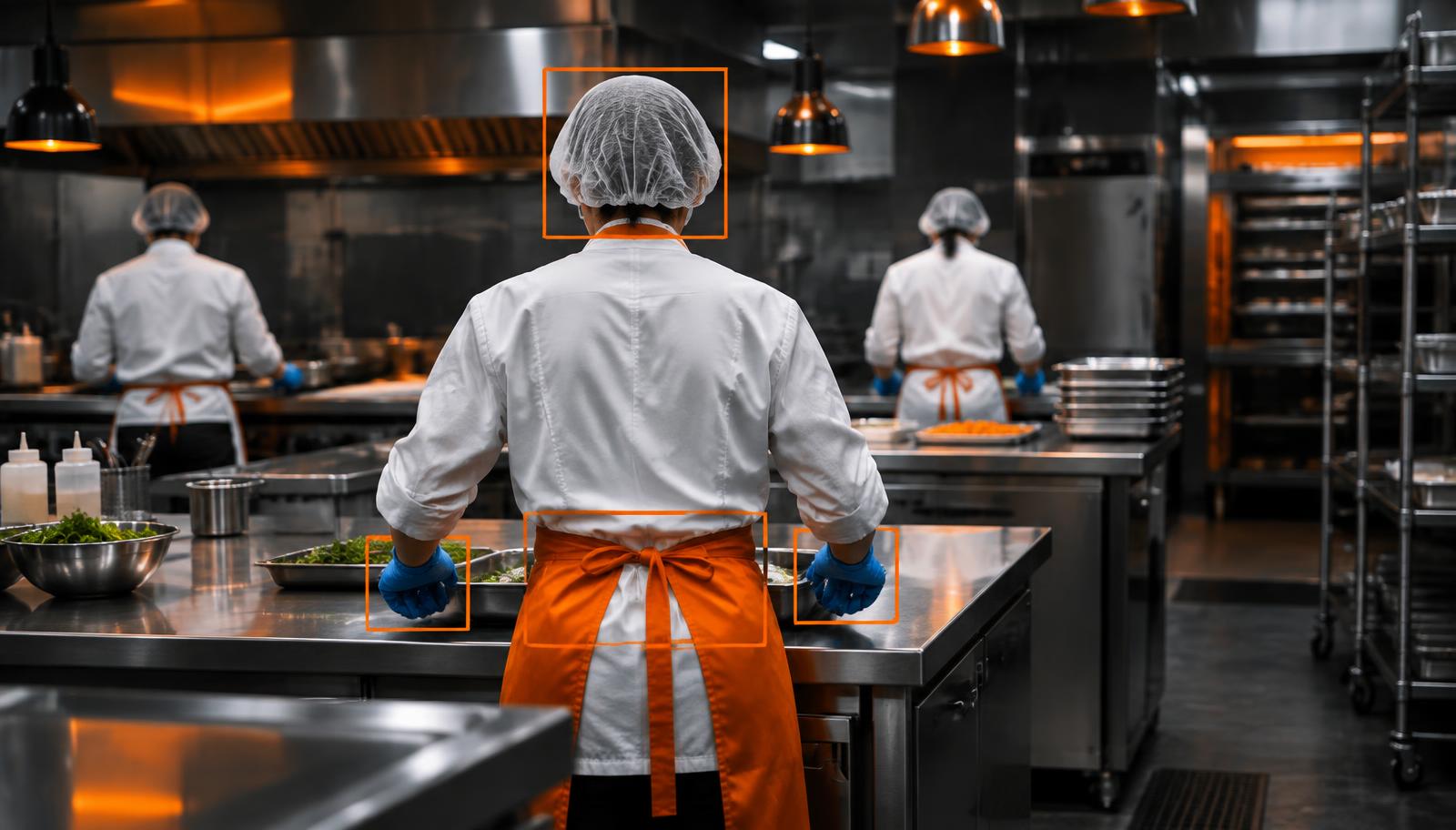
Hairnet, mask, gloves, apron
Every person entering a food zone is checked for the protective wear your plan requires.
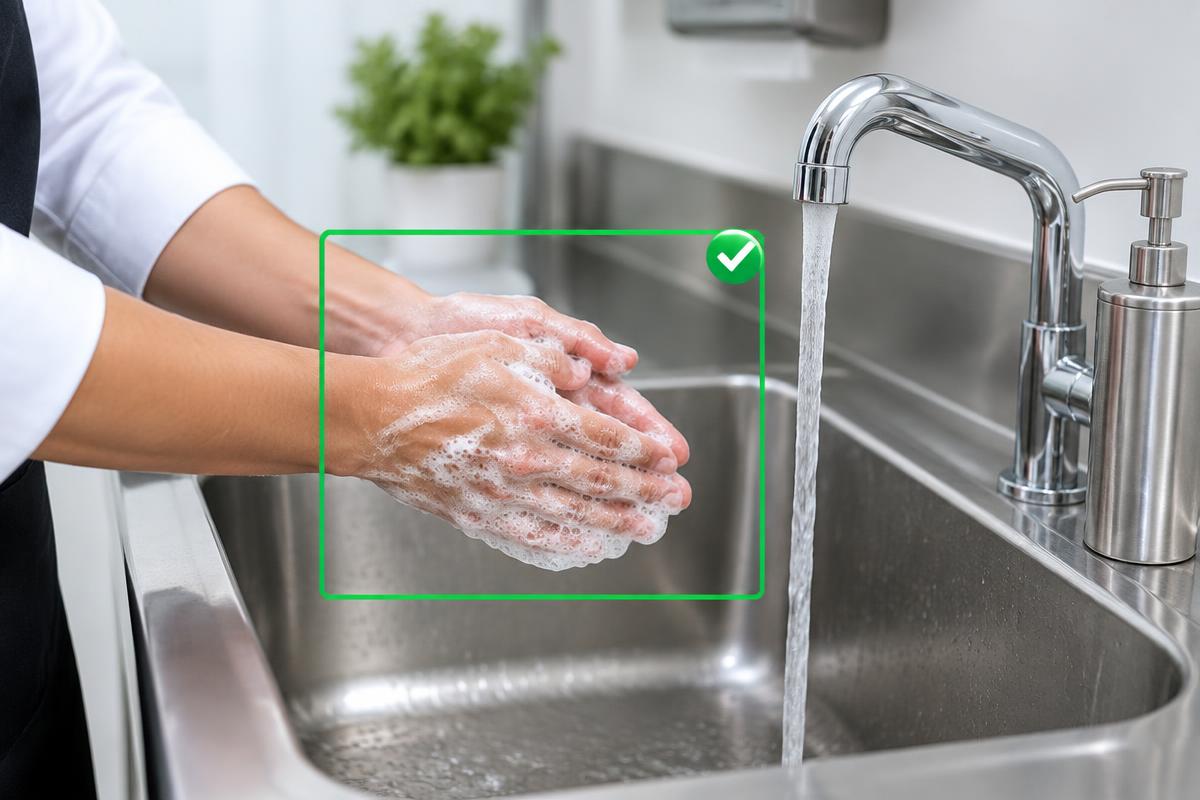
Handwashing before prep
Confirms staff visit the handwash sink before entering the preparation area, and for how long.
Wrong tools in food areas
Flags mops, brooms, buckets and cleaning chemicals near pots, woks and prep tables.
Raw vs cooked crossings
Virtual zones catch people or trolleys moving from raw to cooked areas without the required step.
Colour-coded boards and cloths
Checks the right colour board or cloth is used in the right zone.
Food left out too long
Trays and containers sitting uncovered past your set time limit trigger a reminder.
Pests and spills
Floor spills, standing water and pest sightings are logged with a snapshot for action.
Cleaning schedule done
Confirms each station was visited and wiped at the scheduled time — no more ticked-afterwards checklists.
Built around HACCP
The system supports your HACCP plan and hygiene rules such as Hong Kong FEHD guidance, EU Regulation 852/2004 and the FDA Food Code. It does not certify — it gives your food safety team eyes and records.
Monitoring (Principle 4)
Continuous camera checks on PPE, handwashing, zones and tools at every critical point.
Corrective action (Principle 5)
Instant alert to the supervisor's phone with snapshot, so the issue is fixed during the shift.
Verification (Principle 6)
Daily and weekly hygiene scores show whether procedures actually work over time.
Records (Principle 7)
Timestamped evidence log, exportable for internal audits and inspections.
How it works
Step 1
Cameras
Your existing IP cameras, plus extra ones only where a critical point is uncovered.
Step 2
Edge box on site
Analysis runs inside the kitchen. Faces blurred, video stays on site.
Step 3
Instant alerts
Supervisor gets a snapshot on WhatsApp, Teams or email within seconds.
Step 4
Audit-ready reports
Per-shift hygiene score, weekly trends and a timestamped evidence log.
Where it fits
Questions
Is staff privacy protected?
Faces are blurred by default and the system checks behaviour, not identity. Video is processed on a box inside your kitchen and does not leave the site unless you choose. We help you prepare staff notices and consent in line with local privacy law.
Can it use the cameras we already have?
Usually yes. Most modern IP cameras work. We survey your site first and only add cameras where a critical point is not covered.
Does it replace our HACCP plan?
No. It supports your existing HACCP plan by monitoring the procedures you already have and keeping the evidence. Responsibility and certification stay with your food safety team.
What about false alarms?
Each check is tuned on your own kitchen during the pilot. Thresholds and alert rules are adjusted until supervisors only get alerts worth acting on.
Which languages do alerts and reports use?
English and Chinese as standard, with other languages on request. Alerts can go to WhatsApp, Teams or email.
How long is a pilot?
Typically 4 to 6 weeks on one kitchen: site survey, setup, tuning, and a final report comparing observed compliance before and after.
Start Your AI Journey
Tell us about your business and let our experts craft the perfect AI solution for you.
Contact Our Team
Fill out the form below and we'll get back to you within 24 hours.