What Hospitals Learned from Cleaning Robots: Five Published Deployments
Why look at other people's deployments?
If you are considering a cobot for hospital cleaning, disinfection or laboratory work, the most honest starting point is not a brochure — it is what other hospitals have already measured. Below are five published deployments with real numbers. None of them are smert.ai projects; we cite them because they show what the technology genuinely does in live healthcare environments, and they are the same task types we scope, program and support.
1. Vaasa Central Hospital, Finland — UV-C disinfection
Vaasa Central Hospital piloted an autonomous UV-C disinfection robot in patient rooms. The key finding was consistency: automated cycles remove the variability that comes with manual disinfection across shifts and staff. The hospital explicitly positions the robot as a complement to manual cleaning, not a replacement. Read the deployment
2. National University Hospital, Singapore — restroom cleaning
A seven-day live pilot of an autonomous restroom-cleaning robot across male, female and handicap restrooms achieved over 85% coverage of key fixtures, operated by on-site staff after handover. Hospital management recommended future deployment. Read the pilot report
3. Ipswich Hospital, UK (NHS) — corridor cleaning
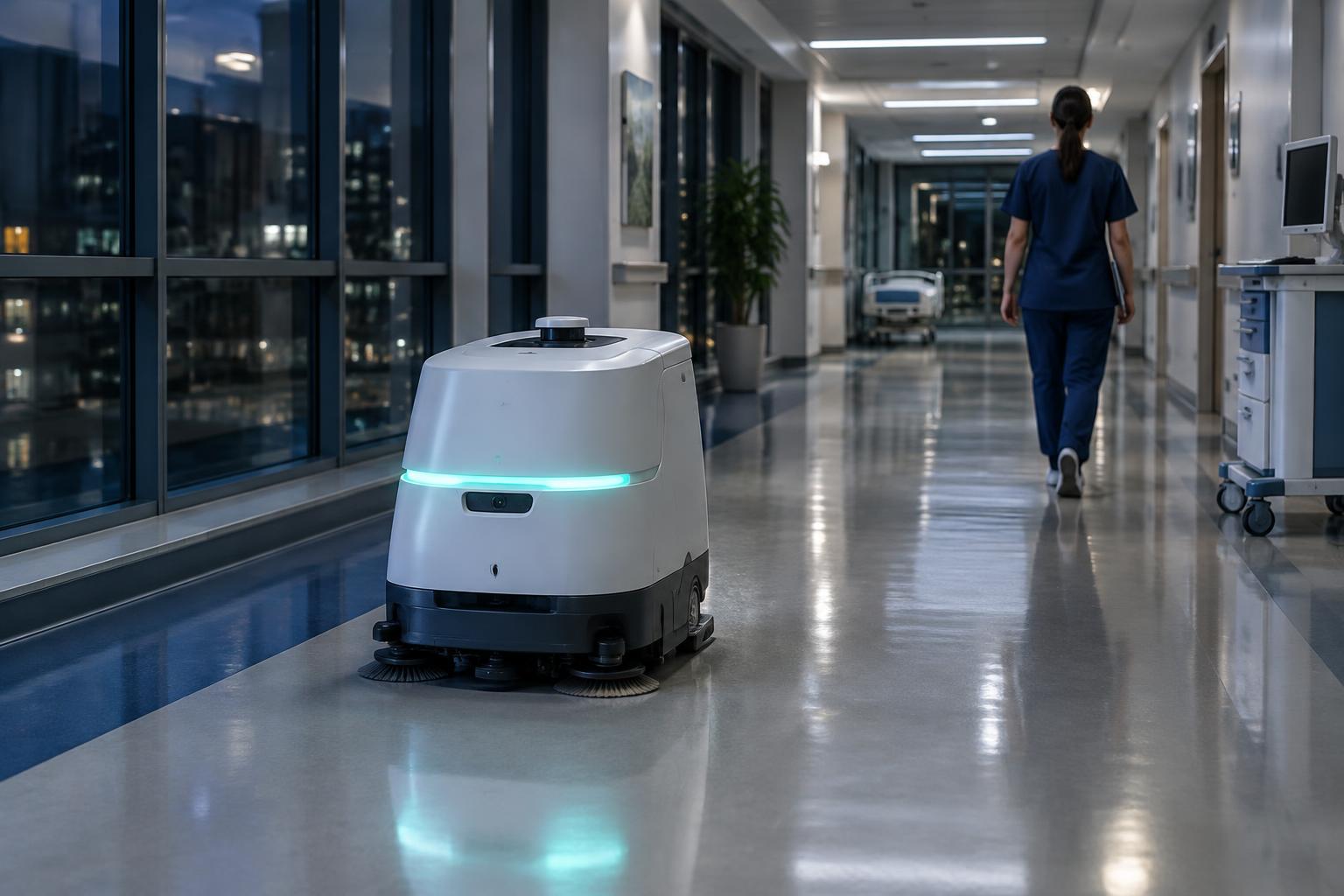
An autonomous scrubber cleans corridors at roughly 703 m² per hour, raising cleaning productivity by almost 300% and freeing over 15 staff-hours per day for detailed sanitising work. Quick-dry operation also reduced slip risk compared with daytime wet mopping. Read the report
4. Winona Health, US — campus-wide floor care
Facing environmental-services staff shortages, Winona Health deployed a robotic scrubber across its campus and measured a 50% increase in cleaning productivity. Read the case study
5. Karolinska University Laboratory, Sweden — lab bench cobots
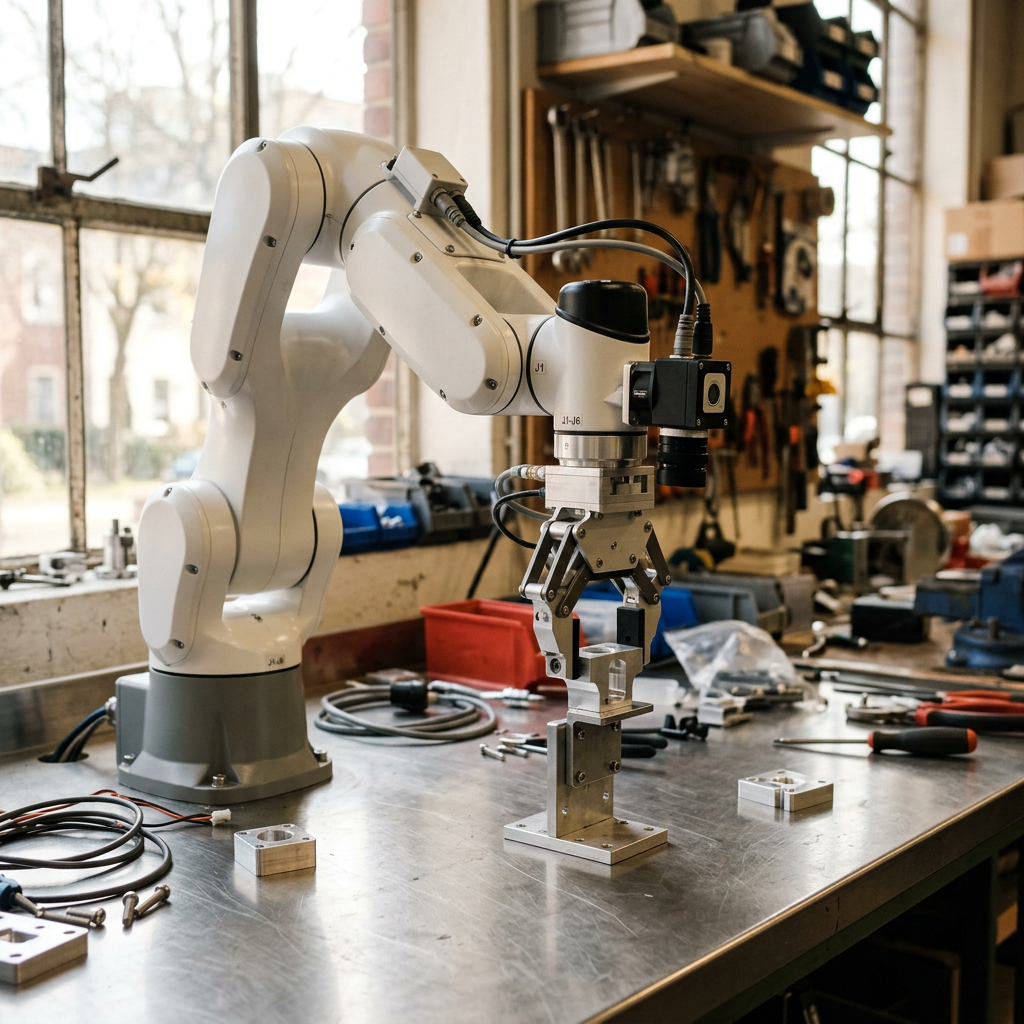
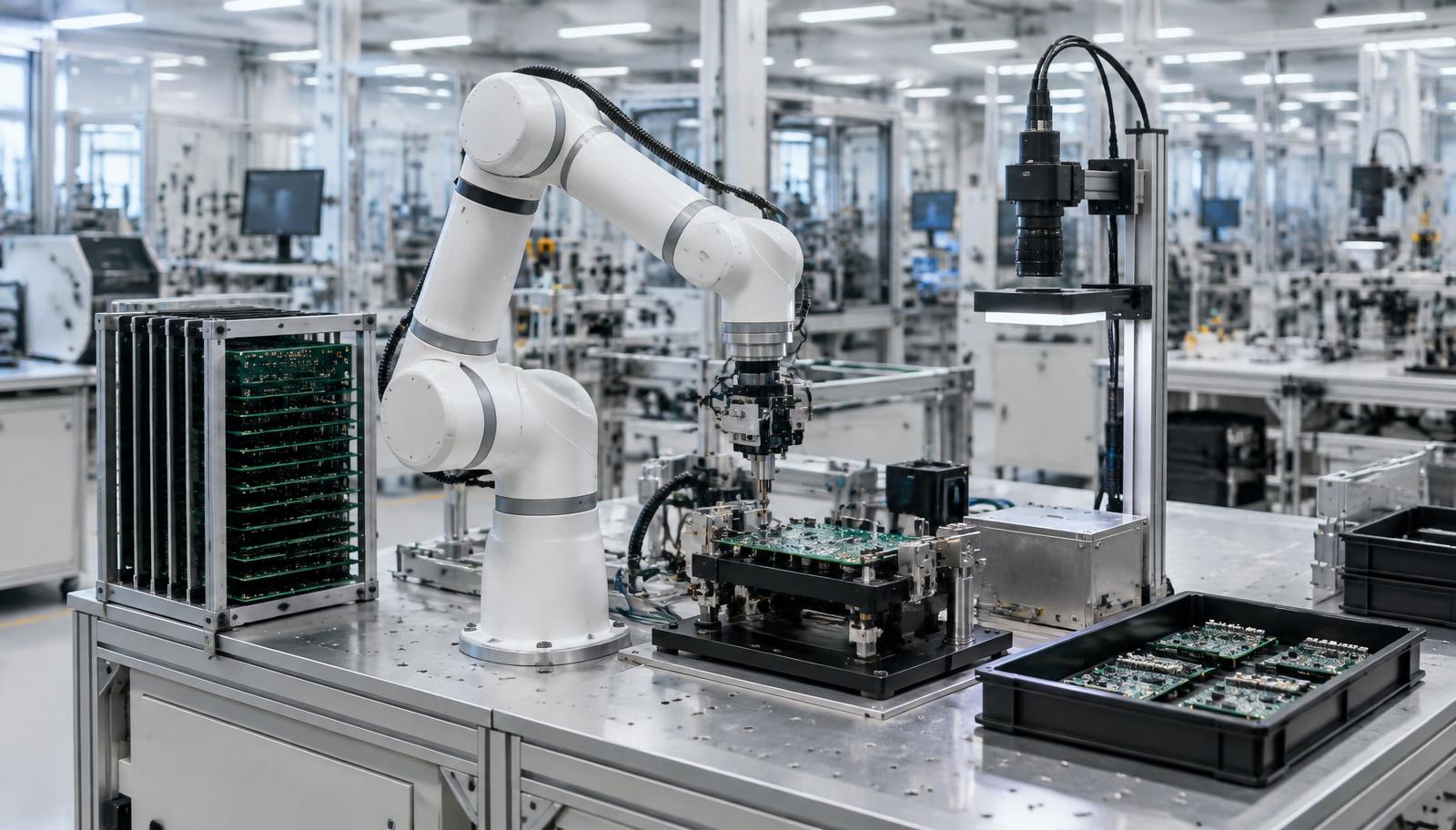
Cobots now open transport sleeves and scan test tubes — tasks repeated thousands of times a day that were causing repetitive-strain problems. The lab added a second robot after COVID-era sample volumes grew. Read the showcase
The pattern across all five
- Robots take the repetitive layer, staff keep the judgement layer. Every deployment freed people for detailed, skilled or patient-facing work rather than removing them.
- Consistency is the first measurable win — the same route, the same coverage, every shift.
- Pilots are short and measured. The Singapore pilot ran seven days with defined coverage metrics before anyone talked about rollout.
What this means for your facility
The tasks above — corridor and restroom cleaning, disinfection cycles, repetitive lab handling — are exactly the tasks a cobot cell can be taught and validated for, site by site, with your infection-control or lab-safety team signing off each routine. Our healthcare robotics page describes how we approach this, including operating-theatre and high-risk cleaning, and our industry case studies page collects published deployments across every sector we serve.
All deployments cited above are third-party projects. smert.ai is not affiliated with, endorsed by, or sponsored by the hospitals, companies or robot manufacturers named; brand names appear in plain text for factual reference only.
Related: Robotics in healthcare
Transform Your Business with SMERT Robotics
Ready to experience the benefits of hospitality automation? Our team is ready to help you get started.