Service Cobots vs Humanoids: Which One Actually Pays Back in Hospitality and Healthcare This Year
The question operators are actually asking
Since Goldman Sachs raised its humanoid unit forecast to 6.48 million by 2035 (Investing.com, 31 Aug 2026), every hospitality and healthcare operator we speak to asks a version of the same question: should I wait for the general-purpose machine?
The answer for 2026 is no — and the reason is not scepticism about humanoids. It's that the tasks that pay back in these two sectors are narrow, repetitive and fixed-location, which is precisely the profile a single-arm Cobot cell serves best and a bipedal machine serves worst.
Hospitality: the four tasks that pay back
- Beverage preparation. Coffee, tea, cocktails, bubble tea. Fixed recipes, fixed cup positions, constant demand, high labour cost per shift.
- Fryer and griddle tending. The hottest, least-wanted station in the kitchen and the one with the highest injury and turnover rate.
- Bowl and plate assembly. Portioned ingredients into a bowl in a defined order.
- Back-of-house pack-out. Cartoning, labelling, restock staging.
Each is a defined cycle with a measurable throughput. Each removes a fraction of a shift's labour, not an entire job — which is also what makes it politically deployable with existing staff.
Healthcare and assisted living: the four that matter
- Pharmacy and dispensing support — high accuracy requirement, high error cost.
- Lab sample handling — repetitive, contamination-sensitive.
- Sterilisation support workflows — hot, repetitive, protocol-driven.
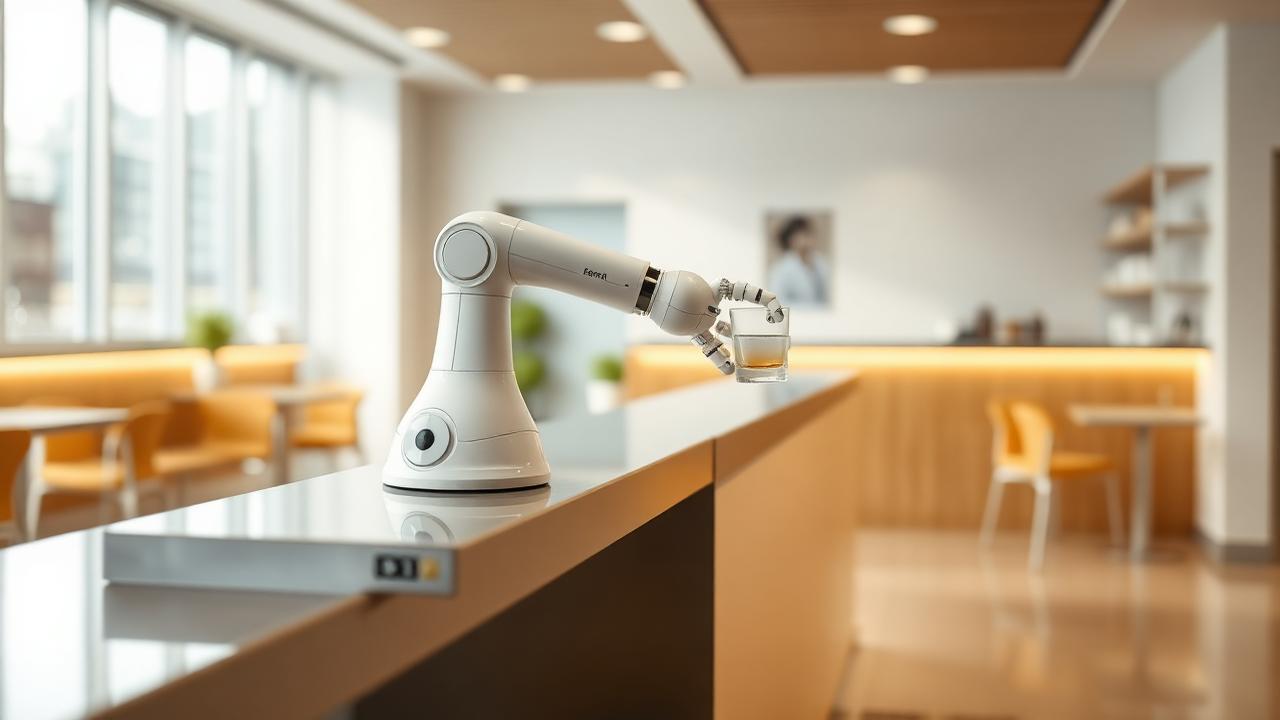
- Daily-living assistance — hydration, meal support, reach-and-retrieve for people with limited mobility, under carer supervision.
The fourth category is the one growing fastest in our order book, and it is not a humanoid application. It is a precise, quiet, force-limited arm mounted where the person actually lives, with voice control in the language they speak.
The payback comparison
| | Single-arm service Cobot cell | Humanoid, 2026 | |---|---|---| | Installed cost | US$35k–US$140k | Not publicly priced at volume | | Certification for shared space | ISO 10218-1 / ISO/TS 15066 today | Emerging | | Deployment time | 2–6 weeks | Programme-length | | Realistic payback | 12–24 months | Not modellable yet | | Re-tasking | Software + tooling change | Software, but hardware unproven | | Service network | Established | Vendor-direct |
The honest number for a properly integrated service cell is 12–24 months, driven by shift count. Two-shift and three-shift operations sit at the fast end. Single-shift sites should expect the slow end and should scrutinise whether the task volume justifies the cell at all.
Where humanoids will win first — and it isn't your dining room
Per Goldman's own framing, the first at-scale humanoid domain is automotive manufacturing — structured environments, deep pockets, existing safety infrastructure, and tasks defined by an industrial engineering department. Logistics pilots at Amazon, Walmart and third-party sites are the next wave, still measured in sites rather than fleets (RobotWale, August 2026).
Consumer-facing hospitality and clinical care are harder, not easier, because the environment is unstructured and the tolerance for failure is near zero.
How SMERT fits
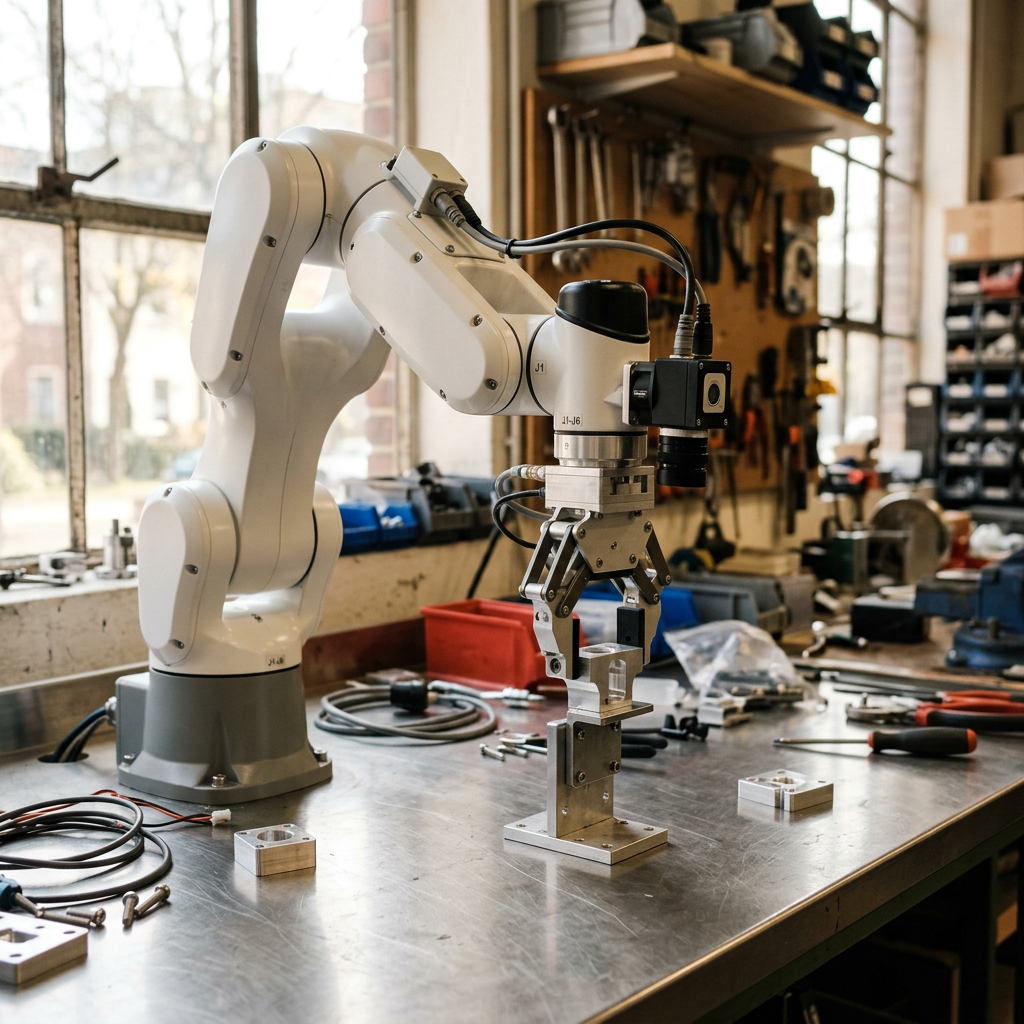
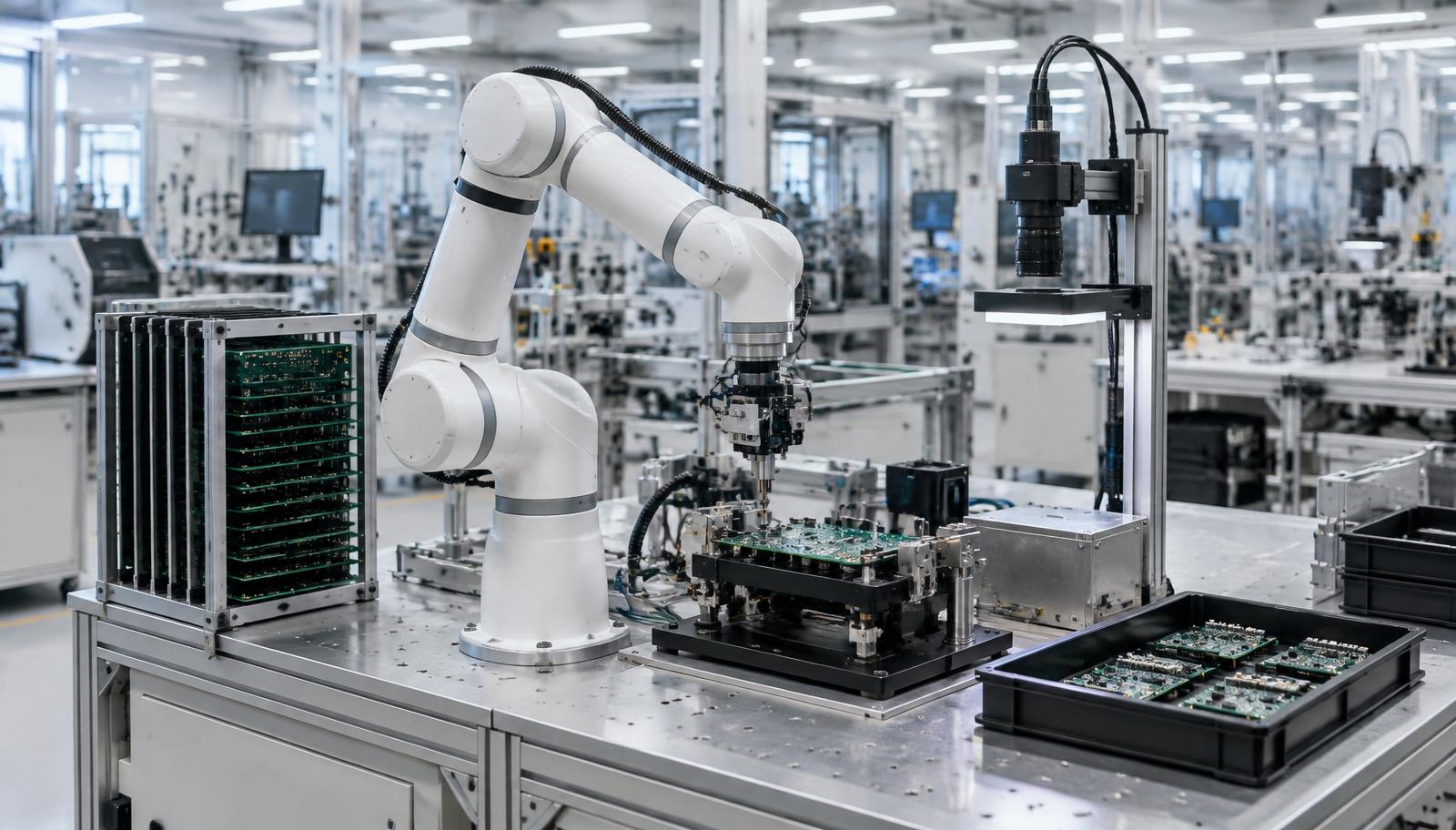
Our 5 and 10 kg SMERT Cobots are deployed in beverage, kitchen, pharmacy-support and daily-living assistance workflows today, with force-torque sensing and vision that make shared workspace safe. The Special Needs Cobot adds multilingual voice control and a defined skill set for assisted-living and disability support. Where a humanoid form genuinely helps, our 7-axis SMERT H / HX platform is available — but we will tell you plainly when it isn't the right tool.
Hospitality portfolio: /robotics/hospitality · healthcare portfolio: /robotics/healthcare · assisted-living platform: /special-needs-cobot · payback model: /tools/roi-calculator · order a unit: /robotics/shop.
Related: Cobot integration
Transform Your Business with SMERT Robotics
Ready to experience the benefits of hospitality automation? Our team is ready to help you get started.