Robotics in Healthcare 2026: Eldercare, Pharmacy Dispensing and Lab Automation Go Mainstream
From pilots to line items
Hospital robotics has quietly moved from innovation-lab projects to operational line items. The change in 2026 is not that hospitals discovered robots — it's that CFOs stopped treating them as CAPEX experiments and started treating them as staffing tools.
Where the money is going
Multiple 2026 market forecasts now single out health service robotics and elder-care assistive robots as the fastest-growing sub-segments in the broader advanced-robotics market (market outlook source, elder-care market source). The reason is not technology hype — it's demography and labor. Every developed economy is short of nurses, pharmacists and lab technicians at the same time as its population ages.
The three deployments that keep working
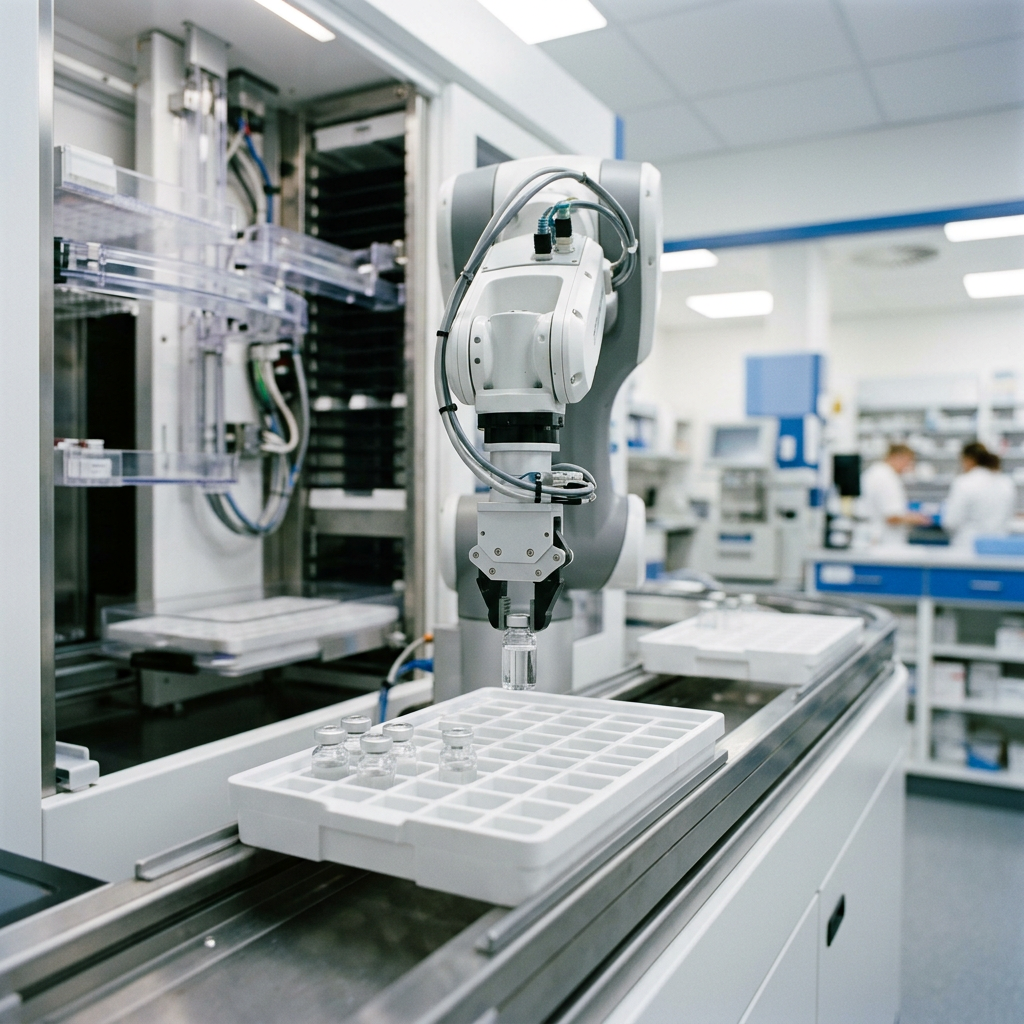
1. Pharmacy dispensing. A cobot arm with computer vision can pull, count, verify and label unit-dose medications 24/7 with a lower error rate than any night-shift technician. Payback in a mid-size hospital pharmacy typically arrives inside 18 months on labor savings alone, before any medication-error reduction is priced in.
2. Lab sample handling. Repeatable, high-volume, low-glamour tasks — plate stacking, aliquoting, decapping. Cobots at 5 kg payload with vision are ideal here because the workflow is constrained and clean, and the cost of a mistake is high.
3. Eldercare assistance. Not humanoid replacements for nurses — that's still years away. What works in 2026 is task-specific assistance: safe patient transfer aids, medication reminders with dispensing, mobility support, and monitoring. These reduce the physical toll on nursing staff, which is the biggest driver of eldercare attrition.
What still doesn't work
Surgical humanoids and general-purpose ward robots remain research programs. Any vendor pitching a humanoid to a hospital in 2026 for direct patient interaction should be treated with heavy scepticism — the safety case is not there yet, and neither is the regulatory clearance.
What to buy first if you're a hospital operator
Start with pharmacy dispensing or lab sample handling. Both have:
- Clear cycle-time metrics you already measure
- A confined workspace that suits a cobot arm's safety profile
- Existing staffing pressure that gives you an easy business case
- Vendor market with real reference deployments
Skip anything patient-facing until you have run 6+ months of hard data on a back-of-house deployment first.
Practical next step
See our healthcare robotics applications — lab automation, pharmacy dispensing, sample handling, sterilization support, eldercare and disability assistance. Or book a 30-min call and we'll size a first deployment with you.
Related: Cobot integration
Transform Your Business with SMERT Robotics
Ready to experience the benefits of hospitality automation? Our team is ready to help you get started.