Turning a Robotics Forecast Into a Local Business: The 2026 Franchise Angle
The gap in the value chain
Every robotics headline in August 2026 was about capital: US$23 billion raised across the sector this year (Crunchbase News, reported 26 Aug 2026), Unitree's Shanghai listing raising roughly US$905 million with shares up over 600% on debut (CNN, 17 Aug 2026), and Goldman Sachs modelling US$38 billion by 2035 (Goldman Sachs Research).
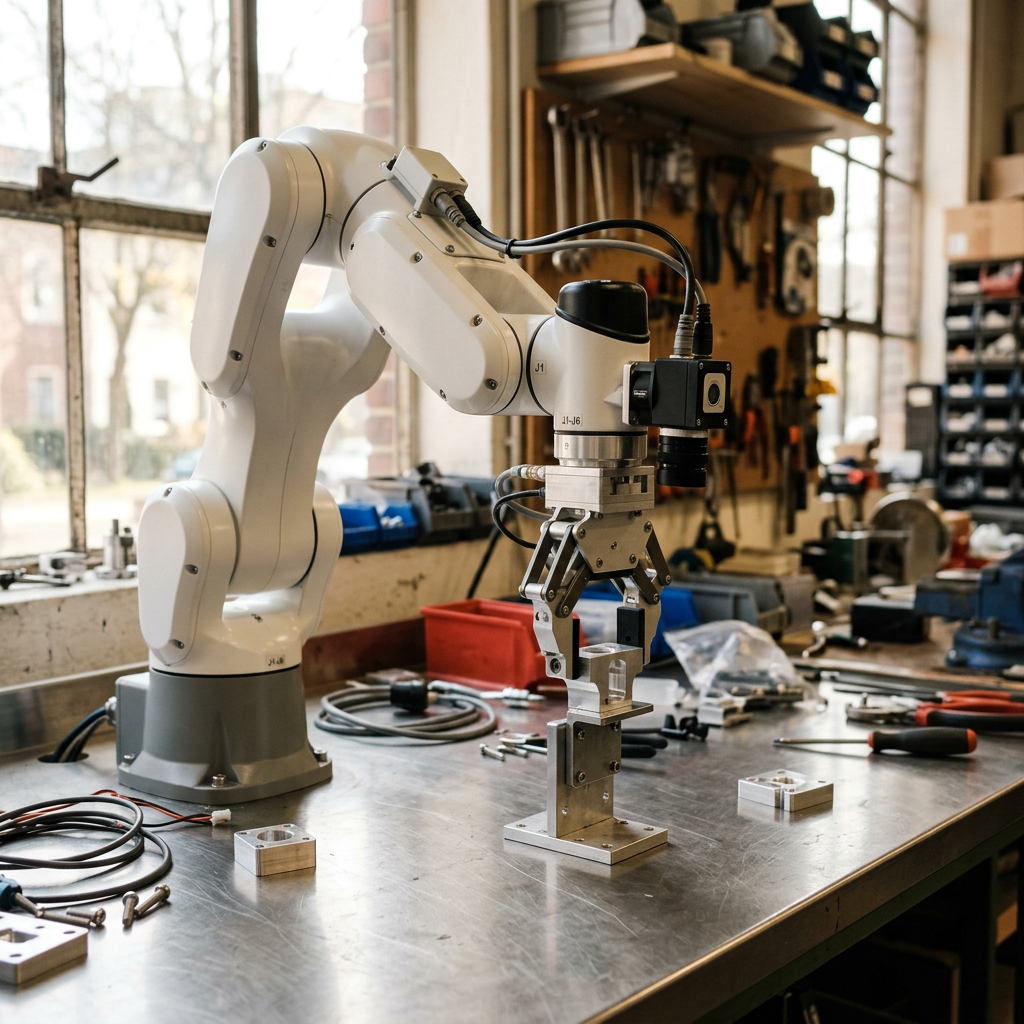
None of that capital solves the actual bottleneck. A cafe owner in Milan, a clinic manager in Dubai, an assisted-living operator in Illinois — they cannot buy from a Shanghai IPO. They need someone local who can specify the cell, install it, validate the safety assessment, train the staff, and turn up when it stops.
That local layer barely exists. Building it is a business.
What the local operator actually does
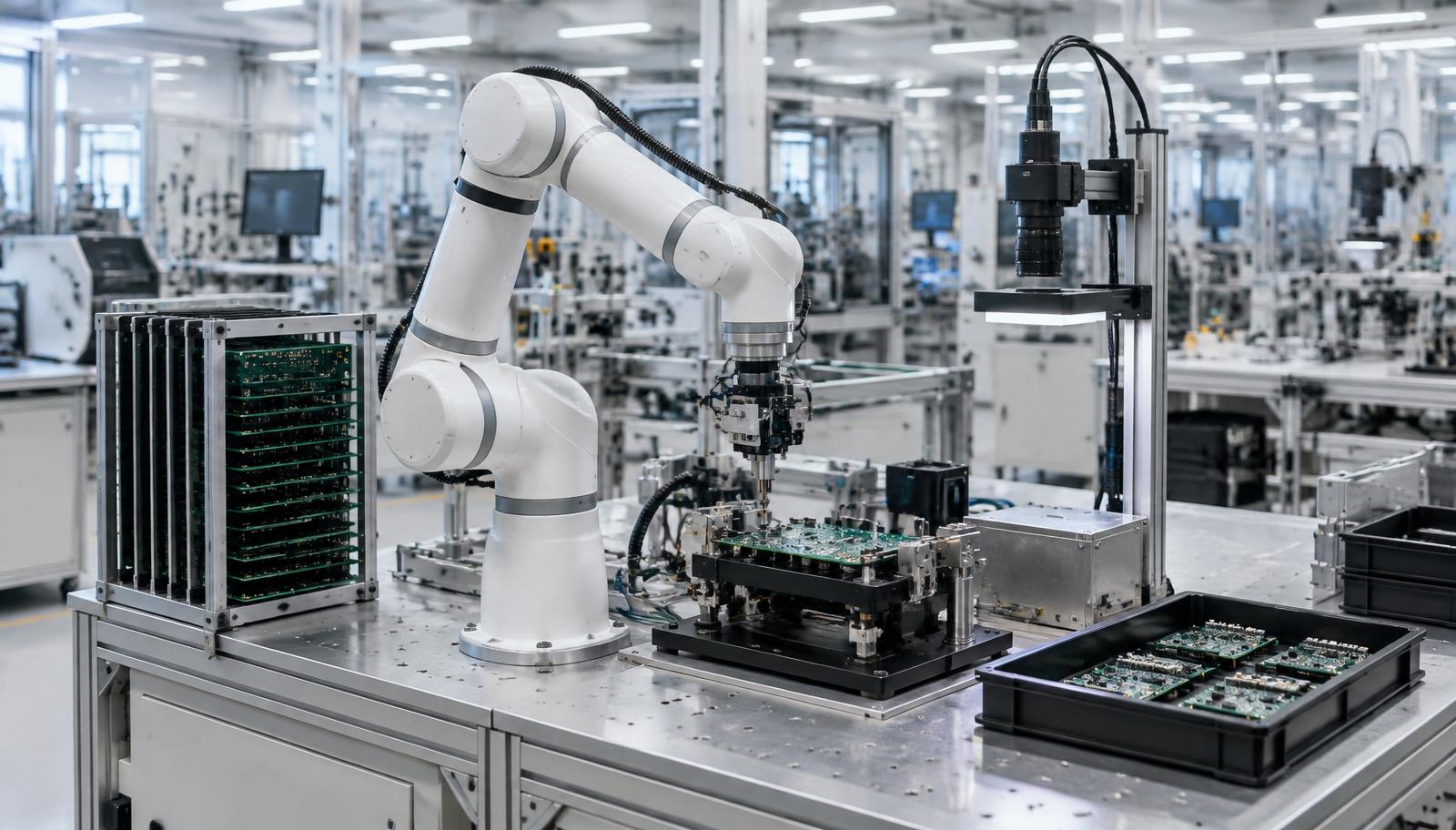
A robotics territory business is four revenue lines, not one:
- Hardware supply. Sell the Cobot cell into the territory, at a partner margin.
- Integration. Specify, install, commission and document the cell. This is billed as a separate service scope — which is also how product-liability stays cleanly separated from the hardware sale.
- Recurring service. Annual maintenance at roughly 10% of hardware value, plus consumables and re-tasking work.
- Software subscription. The AI, vision and fleet-management layer that the customer renews every year.
Line 1 is one-time. Lines 2, 3 and 4 compound. A territory that installs a handful of cells a quarter builds a recurring base that outgrows the hardware revenue within a few years.
What makes it hard — and why that's the point
- Certification. Every install needs a documented risk assessment; EU and US markets need per-install sign-off. This is a barrier, and barriers protect the operators who clear them.
- Safety validation. Force limits, stop distances, protective-stop timing. It is real engineering, and it is why a cheap direct-import arm is not a substitute.
- Service response. The customer's tolerance for downtime is measured in hours.
- Training. The staff on site must be able to add a new SKU without calling anyone.
An operator who has these four capabilities in a territory is not reselling hardware. They are the reason automation works in that city.
Who this suits
- Existing F&B, hospitality or facility-services operators who already have local relationships and want a second, higher-margin line.
- Technical integrators and automation shops who want a certified product line instead of bespoke one-offs.
- Investors looking for an operating business with recurring revenue rather than a passive stake in a venture round.
How SMERT fits
As the systems integrator, SMERT gives a franchise partner volume pricing on integrated cells, our AI and computer-vision stack, certification support, and the AI-native operating system that runs the business — CRM, outreach, support, monitoring, invoicing and contracts in one place, replacing the usual stack of separate SaaS tools. Training and certification are included in every tier, with no separate fee. Service is backed by 24/7 online assistance and our technician network across APAC, EU and the Americas.
Franchise programme and territory availability: /franchising · the products you'd be selling: /robotics · assisted-living line: /special-needs-cobot · unit economics: /tools/roi-calculator · total cost of ownership: /tools/tco-estimator.
Related: Technology franchise opportunity
Transform Your Business with SMERT Robotics
Ready to experience the benefits of hospitality automation? Our team is ready to help you get started.