Back to Blog
Food Robotics
The Complete Guide to Robotic Pizza Making Systems
January 26, 20258 min readBy SMERT AI Team
Mastering Robotic Pizza Production
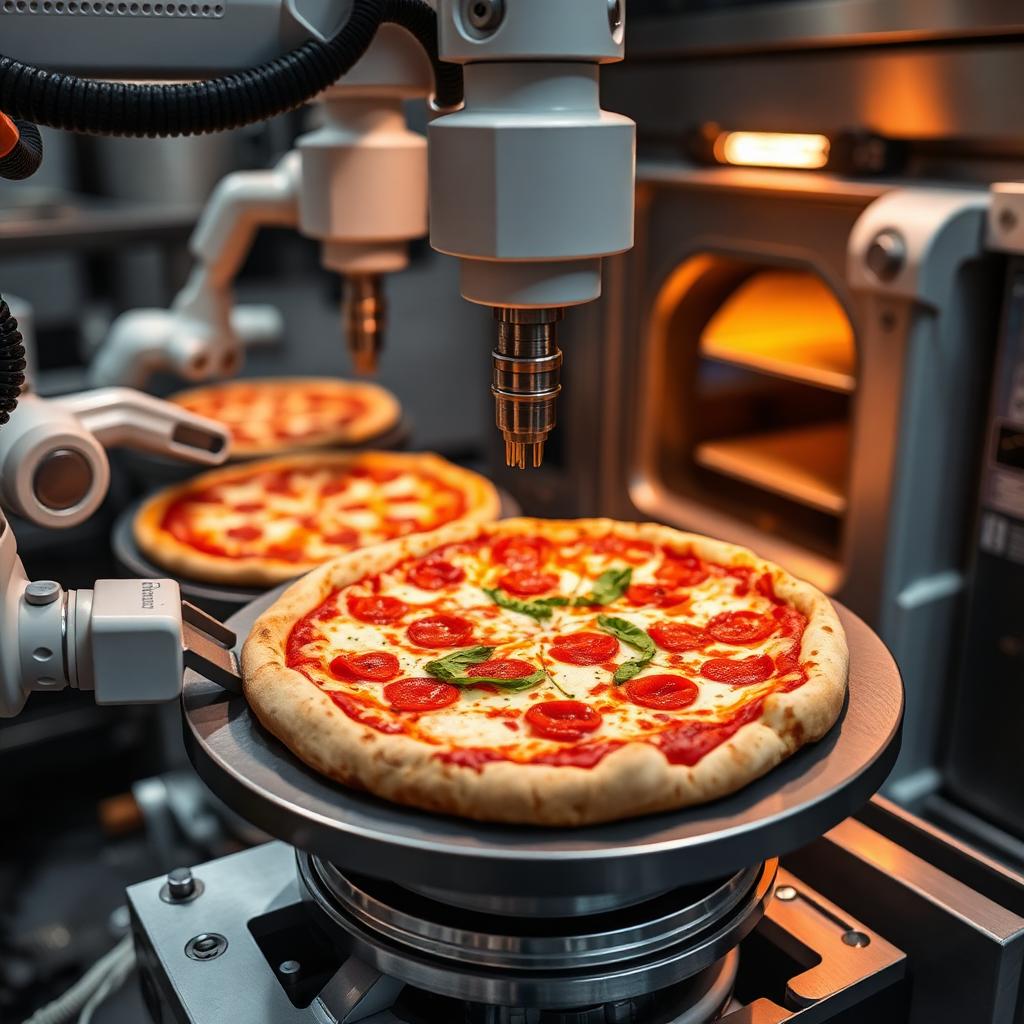
Pizza is the ideal candidate for automation—high volume, consistent process, and precision-dependent quality. This guide covers everything about robotic pizza systems.
The Pizza Making Process
Stages we automate:
- Dough portioning: Precise weights for consistency
- Dough stretching: Uniform thickness and diameter
- Sauce application: Even coverage, accurate amounts
- Cheese distribution: Consistent coverage patterns
- Topping placement: Precision positioning
- Oven loading/unloading: Temperature-safe handling
- Cutting and boxing: Presentation-perfect slices
SMERT Pizza Robot Configurations
System options:
- Compact: 50 pizzas/hour, 2m² footprint
- Standard: 100 pizzas/hour, 4m² footprint
- High-volume: 200+ pizzas/hour, 8m² footprint
- Modular: Scalable station-by-station
Quality Consistency
How robots excel at pizza:
- Dough thickness variation: ±0.5mm
- Sauce coverage: 98% uniformity
- Topping distribution: Pattern-precise
- Cooking time: ±3 second accuracy
- Temperature control: ±2°C precision
Menu Flexibility
What our systems handle:
- Traditional round pizzas (10" - 18")
- Specialty shapes (square, oval)
- Thin crust to deep dish
- Stuffed crust options
- Calzones and folded styles
- Gluten-free and specialty doughs
Integration with Ordering
Seamless workflow:
- POS integration for automatic queuing
- Priority handling for dine-in vs. delivery
- Modification handling (extra cheese, no onions)
- Batch optimization for efficiency
- Real-time order tracking
Labor Impact
Staffing comparison:
- Traditional: 4-6 pizza makers per shift
- Robotic: 1 operator + 1 quality check
- Savings: 70-80% labor reduction
- Reallocation: Staff to customer service
Space Requirements
Installation considerations:
- Minimum ceiling height: 2.5m
- Power requirements: 220V/380V, 30-50 amps
- Ventilation: Standard kitchen exhaust
- Flooring: Level, food-safe surface
- Access: Service clearance on 3 sides
Maintenance Protocol
Keeping systems running:
- Daily: 15-minute cleaning cycle
- Weekly: Deep sanitation, calibration check
- Monthly: Preventive maintenance inspection
- Annual: Full service and certification
Investment Analysis
Financial modeling:
- Equipment cost: $150,000 - $400,000
- Installation: $20,000 - $50,000
- Annual maintenance: $10,000 - $20,000
- Labor savings: $150,000 - $300,000/year
- Payback: 12-18 months
Success Stories
Client experiences:
- Pizza chain reduced labor 75%, increased output 40%
- Sports venue serves 500+ pizzas per game
- Ghost kitchen operates 18 hours unmanned
Automate your pizza production. Request a demo.
Related: Hospitality Cobots
Transform Your Business with SMERT Robotics
Ready to experience the benefits of hospitality automation? Our team is ready to help you get started.