Cobots Hit the SMB Tipping Point: Sub-$35k Arms with Computer Vision Change the Math
The three forces that finally made cobots affordable
For a decade, the pitch for collaborative robotics was "great technology, wrong price." In 2026, three curves crossed at the same time — and the SMB automation market opened up.
1. Component costs fell
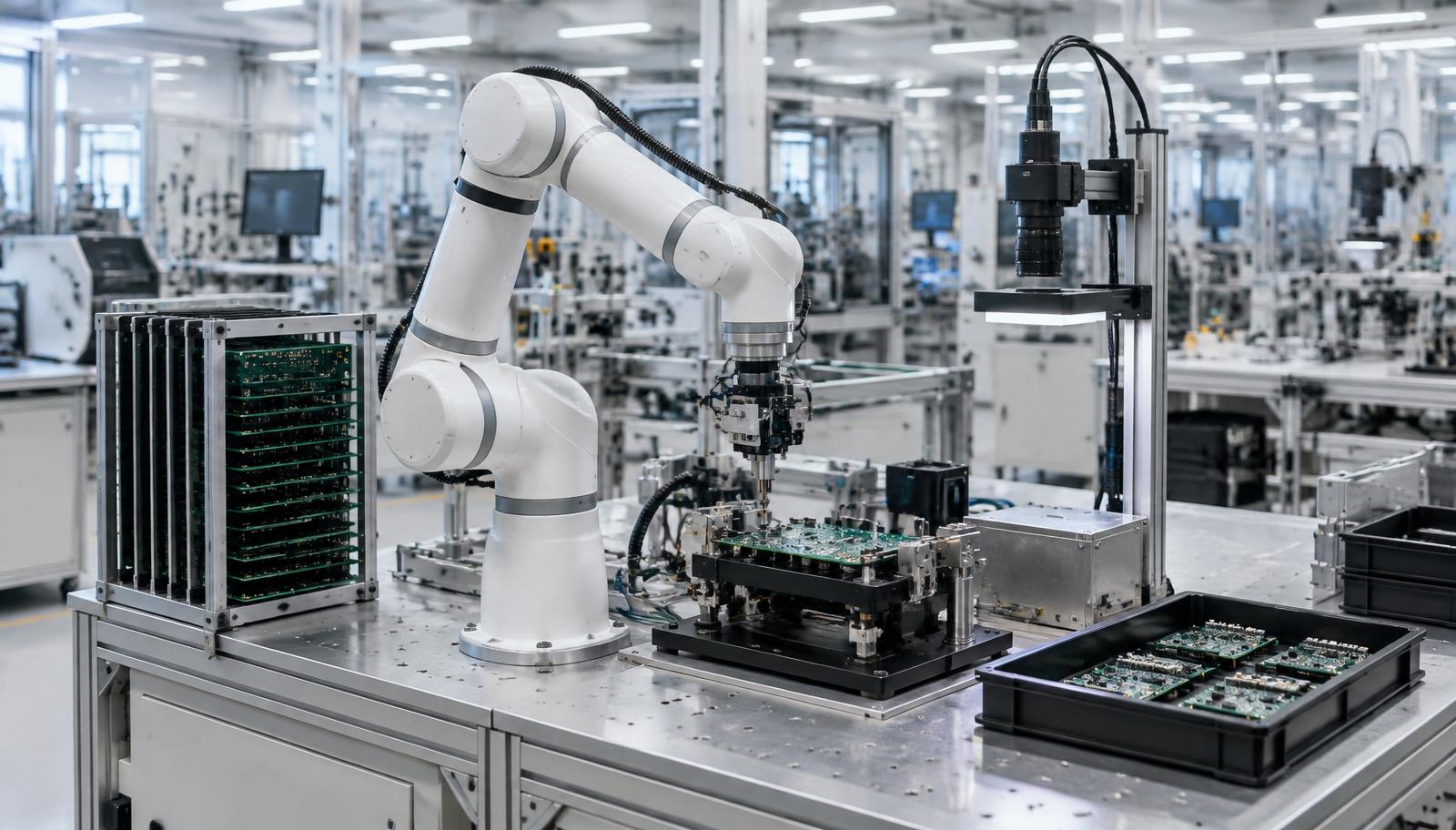
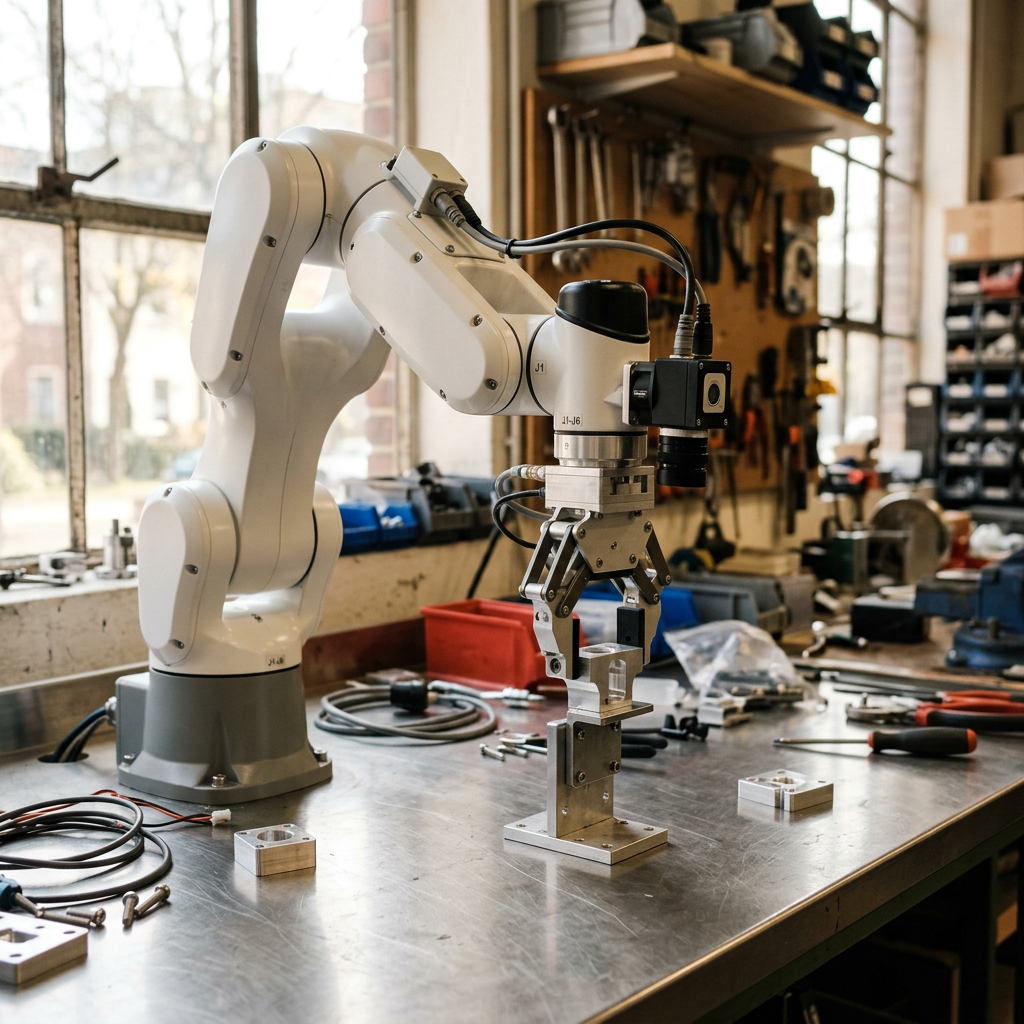
The 2026 Advanced Robotics market report cites decreased component costs as one of the three primary drivers of the current market inflection, alongside AI and Robot-as-a-Service financing (source). Servo motors, torque sensors and industrial-grade cameras are now commodity supply chains. A capable 5 kg cobot arm with computer vision now lands in the US$20k–$25k range, and a 30 kg arm at roughly US$50k — a range that was unthinkable three years ago.
2. AI perception got real
The other change is what's inside the controller. A 2026-generation cobot no longer needs a specialist to hand-teach every waypoint. Vision-language models handle object detection, pose estimation and pick-planning out of the box. In practice this collapses integration time from months to days and means the robot can adapt when the workpiece changes without a re-teach.
That matters more than the sticker price. The old cost of a cobot wasn't the arm — it was the systems integrator invoice around it.
3. Robot-as-a-Service kills the CAPEX barrier
Instead of writing a check for the arm, operators increasingly rent them month-to-month with service, updates and training bundled in. Research firms now list RaaS as a defining commercial model of the current cycle (source). For a small operator, that turns a $25k CAPEX decision into a $700–$1,200/month OPEX line.
What this means for a real operator
Take a small food producer running one packaging line, 8 hours a day, one operator at ~US$28/hour loaded.
- Labor line cost: ~$58k/year
- Cobot with vision-guided pick-and-place: ~$25k hardware + ~$2.5k/year service and software after year 1
- Realistic payback: 11–14 months before residual value
That is not a "future of work" story. That is a normal business decision now — the same as buying a new espresso machine or a new POS.
Run your own numbers on our ROI Calculator, or see how vision changes what a 5 kg arm can do on our Computer Vision page.
What to buy in 2026
Three checks before you sign:
- Vision included, not bolted on. Cameras and inference should ship in the base configuration, not as a $10k add-on.
- Service network in-country. A cobot down for two weeks costs more than any discount is worth.
- Open programming interface. Vendor lock-in on the recipe library is the #1 regret we hear.
Related: Cobot integration
Transform Your Business with SMERT Robotics
Ready to experience the benefits of hospitality automation? Our team is ready to help you get started.